Showing posts with label education. Show all posts

Wednesday, 13 April 2016

The Canoe Doesn't Care Who the Leader Is...

If it tips, everyone gets wet. 

~ as quoted by Ela Smith at the You Don't Know What You Don't Know Workshop series.
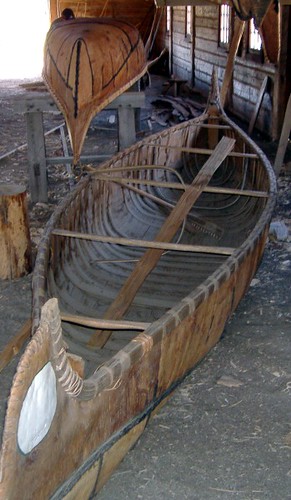

It's another way of saying "we're all in this together".

Most people are aware of the Truth and Reconciliation Commission Report and its 94 recommendations, but few Canadians are aware of the finer historical details leading up to it. Today I had the privilege of participating in the first two of three sessions aimed at educating professionals who work with children in my area.

I had thought I was relatively well-informed about the facts, but there was much that I learned today-- things that begin to help me make sense of why friends and students I have known have been reluctant to share their heritage.

When I was very young, the family that moved in next door to me had a daughter my age. We played together quite a bit. Her name was Marylee (or Merrilee? I was too young to worry about spelling at the time). There were several milkweed plants behind out houses, which shared a large unfenced yard, and we played with the sap and watched the monarch caterpillars and butterflies come and go together. We dug up worms together and watched them burrow back into the dirt. She tried to teach me how to climb a tree, and I brought out my dolls to play with her. I know it sounds cliche, but we really did make mud pies (and mud cakes, and mud pizzas) together. 
One day I heard my mom and grandmother talking about how that "Indian family next door from the reserve" had a problem with their son lighting fires around the neighbourhood, and after some deliberation, I was told I could play with Marylee, but not her older brother. Fair enough--who would want to play with a stinky older brother!

After we moved, I attended a new school and was instantly branded a troublemaker because during recess, I became very upset and agitated when the kids played "cowboys and Indians". The goal was to kill off the Indians! Marylee was an Indian! Why on earth would anyone want to kill her or her family?! Unfortunately, neither the other students nor the teacher on duty saw it my way.

We moved again, and soon after another family moved in beside us. It was a family with 4 kids. and the two girls were close to my age. We played together often, but I was a few months older than the eldest girl, and as result, I tended to become "the leader" in our play. I remember one day I crossed a line in my bossiness, and the girls went home and told their older brothers. They all came out and the brothers gave me a stern talking to. Being an only child, and having lots of toys, they saw me as spoiled. I saw them as a true family, united and strong, and I doubt they ever understood just how envious I was of them. I remember in that moment realizing that no toy I could ever own would ever match the bond they had as siblings, and it was perhaps one of the loneliest points in my childhood. I learned a couple of years after they moved in that their father was First Nations. I probably should have clued into this when they took me to Hagersville for ice cream and to visit to the uncle and grandfather on the reserve, but I was 8 at the time, so perhaps that is to be forgiven. The part I do remember is the way that whenever this came up in discussion, it was always spoken in hushed tones, very seriously, and very secretively. 

I grew up and became a teacher. More than once in my experience in teaching, I found out at the end of the year that a student of mine identified as First Nations. This was generally only revealed to me hesitantly or after knowing the student for several months, and still happens in this way even now. It saddens me that there is a silence and fear of revealing having such a rich and beautiful culture, and only after learning more, am I beginning to understand the role history has had in what can only be honestly described as cultural genocide. Generations of western immigrants and ignorant political and social policies and attitudes have made the original peoples of Canada become, in many ways, invisible and voiceless.

In Canada, in 2016, we have numerous communities without access to clean drinking water. We have housing issues, issues with mouldy, decaying schools and homes, high suicide rates, MMIW, and whole communities of students who have to face moving away from their homes and communities just to attend high school.

I did not know:
- about the "pass" system
- that there are 634 First Nations in Canada
- that homes on reserves are not eligible for mortgages and can only be purchased outright
- that "status" rules are in many ways discriminatory regarding gender
- that "status" "benefits" most often do not materialize--for example, although dentistry is supposed to be covered for status Indians, since the Federal government is less than punctual and reliable in paying for this, few dentists will honour it
- that not only were kids taken to residential schools and abused, but that they were often made the subjects of medical experimentation
- that kids were sent not to the closest residential school, but instead were sent an average of 6 hours away so that they would not be able to easily run away or see their families or communities
...and the list goes on.

Today, in discussing the history in more detail than I'd ever known before, and participating in the blanket activity developed by KAIROS, I am left reflecting on what I didn't know, what I still don't know, and my responsibility as a parent, teacher and Canadian to learn more in order to do my part in the reconciliation process. It took seven generations to get us here, and it will take seven to recover, and it is my responsibility and yours to help make that happen.




Saturday, 19 September 2015

Sex Ed Can Be a Matter of Life and Death

There has been public outcry recently about the new and updated sex education curriculum in Ontario. Leading opposition are the usual suspects--older conservative types along with fundamentalist religious groups including Christians and Muslims.

There are many places to read more about the curriculum itself, as well as the developmental research behind it, so I doubt that this blog message is likely to reach those who are keen to protest, many of whom have made up their minds firmly with or at least as often, without the facts.

Part I: Today We Have the Naming of Parts

But..this is a blog, and someone needs to hold up the stereotype of navel-gazing diatribes, so this time it will be me.

I have heard lawyers and social service workers complain about court cases involving incest, child predators etc. having to be thrown out because the child cannot explain what happened well enough to convict. Knowing what touches are OK and what ones are not, as well as the proper name for body parts at a young age is vital for child safety. We would be embarrassed if a child couldn't name their nose, and only referred to it as that "thing out there", so why would "down there" be in any way acceptable?

Medical professionals also find it helpful when children can be more descriptive as needed, and this can lead to better and quicker diagnoses of digestive problems, bladder and kidney infections, etc.

Part II: Family Relations

There are many kinds of families and children need to understand that families consist of people who live together, support each other and love and care for one another. In our society, families can include extended family, the nuclear family, two or more adults of any gender, or single parent situations. I myself grew up with a grandmother, mother and much younger uncle as my immediate family. It was difficult only because other children and adults in my life failed to recognize us as a family. Children need to understand this concept because the world contains these arrangements and they are a part of the world. An understanding of the concept of family can help a child as they grow up to feel secure and to eventually create a family of their own.

They also need to understand that people who care for each other have strong feelings, and these can be difficult to deal with, but that within the bond of family, disagreements and arguments can be resolved in a healthy way.

Students also need to learn about what constitutes a healthy relationship, how to be a caring partner, and how to get help if needed. More on this will be covered below under "consent".

Part III: Diversity and Acceptance

When I began teaching many moons ago, "tolerance" was the buzzword when it came to diversity. Along with that came "political correctness". It is with great pleasure that I see these concepts dying out to be replaced with much kinder and healthier concepts of "acceptance" and "understanding".

Tolerance is pretty meaningless as all it means is that you allow someone else their differences without raising a stink about it. We can do better. By striving to listen and understand one another, we can celebrate our similarities, understand and appreciate our differences, and remain free to be true to ourselves. Is there a better lesson we can share with our students? I think not.

Within this area, comes the whole topic of identities: gender identities, and sexual identities. People protest the inclusion of such education on religious grounds, but the reality is that there is room within these religions for acceptance and understanding. Often, religion is used as a crutch to disguise fear, discomfort, and in many cases, outright bigotry.

After WWII, many Germans who had been indoctrinated by Nazi ideology underwent re-education so that they could unlearn the hateful attitudes of that regime. In some ways, we need to do the same thing to protect many of our children. Bigotry and bullying is much more pronounced against LGBTQ students than the general public. In fact, the suicide rates for these populations can range from 3-4 times higher than in the general population, depending upon your sources. Depression, missed school, physical assault and abuse--all of these are much higher for the LGBTQ population than the general population.

Teaching students about these issues can save lives.

Part IV: Everyday Health, Safety, and Consent

When people of my generation hear the words "sex education", we immediately think of STD's and family planning. Those topics are again, very important. Despite many advances in treatment, HIV has not been cured, nor has AIDS. There are many other STD's that can also have long term and even deadly consequences if left untreated.

Breast and testicular self-examination can reveal cancerous growths early on and potentially save lives, as can regular medical checkups. Being familiar and comfortable with your body can also help students understand their sexual preferences and to improve their body image.

Pregnancy and childbirth are generally safe in the western world, but there is still a mortality rate for each, and a moral question of family planning that is important to address with students whose bodies are becoming capable for such things. Students need to understand how to protect themselves and how to plan and space a family, if desired, as desired.

Along with this topic comes the issue of consent. With 50 Shades of Grey, the prevalence of easy-access porn on the Internet, and an overwhelming rise in the amount and degree of violence depicted in the media, this is again, crucial for all young people. We do live in a society in which many embrace a "rape culture". Women are objectified, men are expected to "perform" and "take control" and the concept of consent can be blurred.

Particularly chilling are some of the incidents that have happened over the past few years including filming & distributing on the Internet images and videos of non-consensual nature, some of which have led to suicide and/or murder. We also have the unaddressed issue of thousands of missing and murdered indigenous women in our country.

This is serious stuff.

It is vital that students understand that their bodies are their own, that their clothing does not "ask for" a particular kind of treatment, and that a "no" or equivalent (I'm not sure, slow down, whoa, being unconscious, etc.) all mean it stops immediately regardless of any "agreement" spoken or unspoken beforehand. No one owes anyone else sexual favours, for any reason whatsoever. Including marriage. Including "contracts". Including getting drunk and passing out at a party. And so on. It's the law, and they have a right to know about it.

So, before protesting the loss of innocence of children in learning about their bodies and how they function, their rights, and how our society works, take a moment to consider what the consequences of them NOT learning this can be.


Monday, 14 September 2015

Halloween 2015

Halloween 2015

If you are familiar with this blog, you will know that our family really tends to get into the Halloween season.

I prefer the subtle and mysterious rather than the blood-and-gore approach to Halloween spookiness.

We have moved into a new neighbourhood with many more children, so I plan to set up the Mad Scientist station in the driveway again this year. This is not to be confused with the company of the same name!

In the past, we have had a couple of Jack O'Lanterns set up with dry ice, and had kids mix their own homemade play dough (for younger kids) or silly putty to keep as their Halloween treat in labelled freezer bags.

This year, I plan to add to it by doing  a little more with the dry ice (cabbage water and dish soap, screaming spoons, etc.). I also found this simple physics trick to share with kids (I will call the water "possessed" or haunted). In this trick, you use the properties of refraction and reflection to reverse the direction of an arrow drawn on a card behind a glass of water. 
On a similar theme, I'll have a bicycle pump available to make a cloud in a bottle (aka "Ghost in a Bottle") using rubbing alcohol and a 2 litre plastic bottle.

I'd love to do more in the way of activities, but many kids are in a hurry that night. Sometimes it can be hard to compete with a sugar rush!

For decor, we may make plastic wrap and packing tape ghosts lit with cool-white LED Christmas lights to decorate the lawn and veranda too. Perhaps they will be emerging from graves.

I'd like to make a model owl with glowing eyes to sit in our lonely tree out front and/or a way to make our tree look possessed (eyes, make branches look like hands etc.). I have yet to find an idea that I like for these though.

I have a 20+ year old "spooky music" cassette tape I've been using that I really should update. In researching music for it, I found an easier Halloween music solution. There are many live streaming options available with a quick internet search. All you need to do is choose the one that suits your crowd and function best. Here's one I found, but really, there are many options out there!

While that goes on, we will rotate so that two of us from our family will also be canvassing the neighbourhood for Halloween for Hunger to collect non-perishable items for the local food bank. Be sure to have food items handy for such drives in your area! Click on the superhero image for more information.

More Halloween party ideas from past years:
http://lemonadebyll.blogspot.ca/2010/10/great-green-halloween-tips.html
http://lemonadebyll.blogspot.ca/2013/09/planning-ahead-for-halloween.html
http://lemonadebyll.blogspot.ca/2011/10/halloween-science.html

On the website, http://llemonade.com/halloween, there are many more activities and links to match the season as well.

Tuesday, 17 September 2013

The Latest False Dichotomy in Education

Years ago when I was a student teacher, there was a battle of sorts being waged in the language arts curriculum: the phonics vs. whole-word approaches to teaching reading. On one hand, students were asked to sound-out all words they did not know, and on the other, students were asked to memorize thousands of words. Reality: fluent readers use a variety of techniques including but not limited to the ones espoused by such methods. When some people tried to call this approach "whole language" it created confusion as many missed the difference between "whole word" where individual words are memorized out of context with 'whole language" in which context, along with phonics and sight words is an important component.

Many moons later, we see a similar battle being waged in the teaching of mathematics. 

There are the traditionalists who value "sage on the stage" and "drill and kill" methods in which students memorize algorithms and focus on answer-driven tests. Students become walking calculators, and weaker students are often left without the conceptual understanding to allow them to know when and how to apply these algorithms to solve everyday problems. Mnemonics such as "Yours is not to reason why, just invert and multiply", "FOIL" (which only works for up to two terms), and what I've only recently discovered, the "butterfly method" for multiplying fractions are examples of how conceptual understanding is replaced with memory tricks in order to gain a correct answer on a standardized test.

Then there are the constructivists who believe that students must create their own knowledge set through experimentation. They offer an overwhelming range of options for students to explore, but often neglect the final stages of consolidation and review, as well as time for practice with additional problems. Critics argue that since it took centuries to develop the fields of mathematics, expecting students to "reinvent the wheel" is a waste of time for everyone. Such teaching can also be time-consuming, and students who are struggling can become overwhelmed and confused with the large variety of methods to solve a given problem.

Again, just as in the reading example, the polar extremes reflect a false dichotomy when it comes to learning.

Since there seems to be a reluctance for educators, policy makers and the general public to consult the literature, examine what we know about cognitive development and read the studies, there becomes a tendency to grasp onto the methods one is familiar with and hold these as sacred. In many cases in North America, this means that the traditionalist methods are held in higher regard than the constructivist methods. Looking to other countries that tend to do well in mathematics, there are some interesting cultural differences that appear in the approach to teaching and evaluation. One example can be seen in this video with Phil Daro http://vimeo.com/30924981.

In the middle, is student inquiry (again, the name is often used as a substitute for pure constructivism, which causes confusion) in which students are encouraged to try out problems using whatever means they can, discuss the various methods that worked and didn't, share and yes, memorize the methods that work consistently, and connect these methods and patterns to problems they encounter in everyday life. There is structure to the lesson, but there is also a place for students to work with problems on their own terms, experiment and make connections with prior learning. Lessons are scaffolded so that they build on concepts already mastered. Consolidation happens with the whole class and is reviewed again at the start of the next lesson. Students still memorize times tables and formulas, but they also understand where these come from and what is happening with them. They can use a matrix to show multiplication and can tell you why ax + by + c= 0 is a different way of showing y=mx +b, and how various different values of "m" will change the slope of a line when graphed. They can relate this to situations in their everyday life. They know what to do when confronted with 
(2x + y)(3x +2y -z)
 because they have learned the underlying pattern of how this works, rather than just a convenient but limited mnemonic. The understand that BEDMAS is an mnemonic shortcut that helps them use the distributive property, and that the multiplication/division are interchangeable as are addition/subtraction.
Without context, understanding of the underlying pattern, and sufficient understanding to apply the concept widely, a math student's abilities are no more useful than a calculator, and are likely much slower at that. We need people who can not only calculate, but choose the appropriate algorithm and problem-solve in a variety of situations. We need people who understand how to program the algorithms in the first place. Math is not a religion to be taken on faith; it is a science that stands up to scrutiny. We would do well to remember this as we approach the subject in the classroom.

Students learn by doing and thinking, by struggling through problems. When this is connected to their everyday experiences, it becomes meaningful. If we can recognize this in other subject areas, then why not in math?


Thursday, 9 May 2013

What is 4?

I'm currently reading The Glass Wall: Why Mathematics Can Seem Difficult by Frank Smith.

Early on, he describes how number is not the same as quantity. He uses 4 as an initial example, but then moves on to use a large number, somewhere over 7 hundred million, to demonstrate that the number is valid whether you have an associated quantity of something that it represents or not. Number is number. However we develop number sense, he argues, it occurs separate from natural language which tends to be ambiguous where math, buy its nature is not ambiguous (at least not to those who understand it!).

So, what in fact is 4? How do we truly understand the concept of 4 (or any other number)? Smith argues that a number can only be put into context when it is compared with other numbers. He sees mathematics as a separate existence than the rest of the world.

I'm not quite sure if this rings true for me or not, but it is an interesting thought to explore.

This also made me wonder what certain young mathematically inclined students might think about it, which led to the following idea for math enrichment.

Lesson Plan Idea: What is 4?

Students are challenged to brainstorm how they would explain the concept of 4 to people who had no numeracy (aliens, young children, etc.). They then move together into groups and share their ideas. The group chooses several to share with the class. One person (either the teacher or another student) plays the role of the learner while the students attempt to explain the concept. The learner should do their best to avoid using any previous mathematical knowledge and base their "understanding" purely on the information given by the students.

Class discussion should include:

  •  counting--number/object connection; meaning of each number name
  •  quantity--did they use concrete items (manipulatives) to demonstrate their ideas, and how successful might this be in getting the idea of number across without ambiguity (were the shape of items, colour, function or other characteristics confused with sense of number)
  •  use of geometry and/or other drawings or models
  •  other ways of relating the concept
  •  would their system of explanation work for very large numbers, fractions, decimals, negative integers, zero, etc., and if not, how could they adapt or change it so that it will
  •  was this difficult, and if so, why do the students think it was
The activity is open-ended and intended to provide deeper insights into the complexity of seemingly simple mathematical concepts.

Other related lessons might include:

  • working with different number systems
  •  working with different bases 
  • writing computer programs to solve very basic mathematical problems (using a machine-based language or something without built-in mathematical algorithms that the students can access)
  • a study of the historical use of "zero" and what it really means in mathematics (hint: it has a more complex meaning than simply "nothing")

For more math activities, see the Lemonade Math Page

Monday, 5 November 2012

Differentiating Between Gifted and High Achieving Students

The title of this post may seem, at least at first glance, to be somewhat of a non-issue to many (most?) people, be they parents, educators or the general public. And yet, if we take the time to do this, we might just find that we are suddenly better able to understand and meet the needs of a large number of students.

Unfortunately, our society is driven by test scores. Because of this, IQ scores are sometimes viewed as value statements rather than descriptors. More useful than the number is a look into the individual subtest scores in order to determine a student's relative strengths and weaknesses in order to better meet their educational needs. Achievement and IQ are separate aspects of an individual and only through a combination of the two are students able to achieve true educational success, that is, to continue to learn and grow as individuals throughout life.

Truly Gifted Students

Let me start with another idea that may seem contradictory: many gifted students underachieve, fail, or drop out of school. They are more vulnerable to mental illness than the general population. Their needs can be, and are often, overlooked. There is a tendency to misdiagnose associated behaviours as social defiant or ADD/ ADHD (Attention Deficit Disorder with or without hyperactivity), among other things. While it is true that one can be both gifted and have another such designation, it is often the case that the diagnosis is made through misunderstanding.

It is important to clarify what we mean by "gifted" in terms of both population and needs. Some places call all students who perform above average gifted; some rely on teacher reports, and others rely on a battery of standardized tests administered by a registered clinical psychologist to determine an IQ score, or when this is not possible due to subtest variation, a series of scores. [IQ tests are made up of several sections, called "subtests" which are made up of a series of tasks that test different cognitive functions]

Even when the students are properly tested, there is a discrepancy as to what magic number or numbers will be the "cutoff" between "gifted" and "non-gifted" populations. In some areas, this score can be as low as 120, and in others it is as high as 140. When you consider that an "average" score is 100, and a score of 70 is considered developmentally delayed (aka mentally retarded), the difficulties with the difference of 20 points in determining a gifted label become readily apparent.

For the sake of argument, I will use the number of 130; while recognizing that it is an imperfect designation.
In fact, the general consensus in psychological circles seems to be that 130-140 = gifted; 140-150 = highly gifted; 150-160 = exceptionally gifted and 160+ = profoundly gifted.

Let's think about a person who is profoundly gifted. This may be quite difficult for most of us, because a person with an IQ that high is literally one in a million. They are as different from "average" as someone who is low-functioning and will require lifelong assistance is on the other side of the distribution curve. Their needs are clearly very different than someone who is of average intelligence (90-110) or even highly intelligent or gifted.

I will try and put it another way to make my point here.

One definition for determining a learning disability is a discrepancy between scores of a subtest such that a low score is three or more standard deviations lower than the other scores.[It is important to note that there is a lack of consensus among professionals regarding a specific definition of learning disabilities and also of learning disorders] By this definition, a profoundly gifted student could have a learning disability in an area and still score in the gifted range in that area. Is this a problem for them? Possibly, if it affects their ability to communicate thoughts and ideas, or to remember them effectively. 
Even a student who is highly gifted might have a learning disability that is masked by their apparent "average" ability in that area. 
Students whose discrepancies are thus missed are at risk of low self-concept, frustration, and other emotional and academic problems.

In fact, even without discrepancies in different areas, gifted students have different needs than other students, particularly in the areas of emotional and social development, study skills, and executive functioning. It is not uncommon for these students to reach the university level without ever having had to study in order to do well. Since they have never had to learn this and possibly other executive functioning skills, they have not had any experience with them and can find themselves suddenly overwhelmed. They need to be specifically taught how to study and manage their time. Gifted students are often observant and reflective, and can have anxiety over local and global issues that their peers are not likely to understand. A program that is truly designed for gifted students should incorporate meaningful ways to address these issues that are unique to this population.

In terms of academics, each student will need their own IEP (Individualized Education Plan) which addresses their strengths and weaknesses. Always strengths before weaknesses! These students know they are different and they need to find ways to celebrate those differences in a positive way. It is important that these students learn how to cope with failure, which can only come when they are challenged at an appropriate level and supported emotionally so that they learn how to take risks and work towards a goal. Letting gifted students coast through known or comfortable material does these students a grave disservice and must be discouraged in order for these students to thrive, not only in school but also in life. 

Gifted students, particularly those with the highest IQs, need opportunities to meet and work together through conferences, exchanges, ability grouping where possible, etc. Mentoring with specialists and professionals in various fields of study can form an important part of their middle and high school education.

High Achievers

We all know the stereotype--the kids with their hands up, who hand in their assignments early with double the word-count, who do their homework and reach beyond it to understand the material inside-out. They are the Hermione Grangers of the world. These are kids who are average to above average in ability but who are for one reason or another driven to achieve. These kids know how to study because it is a way of life for them. They are organized and diligent, and they understand that their achievement is linked to hard work because they have learned this through experience.
Frustrations these kids may have often come from group work with less motivated students, delays in feedback from teachers, and material that repeats itself. 
These students are often the "do-ers" and "joiners" in the school, and some may enjoy leadership within and outside of the school setting. 
Academic enrichment for these students should include just that--enrichment. Guest speakers, field trips, and cluster grouping for project work, as well as opportunities for students to share their work with others will meet these students' needs much better than the gifted programming I describe above. Peer tutoring is also an option for these students, but should be a choice and not a substitute for enrichment, or a punishment. Students should not be given the job/punishment/perk of marking other students' work. This is the teacher's job, and it is the teacher's job because all students deserve a degree confidentiality.

There are, of course, students who belong to both groups--students who are highly motivated and gifted. I would argue that those students should have access to the options I outlined in the "truly gifted" section, mainly because I believe that those are the most crucial skills and issues that need to be addressed for any gifted student. The IEP should identify and aid in further meeting their needs.

When we envision programming for gifted students, we often think of the options I have described for the high-achieving group. In this way, we set ourselves up for many of the problems that riddle gifted education, particularly regarding those related to demographics. Between sexism, racism and elitism, gifted programming has many feeling that it is somehow an unfair advantage provided for a chosen few. It is no wonder then that many educators treat is as a sort of reward for accomplishments rather than a necessary means to meet student needs.

Only when we can be honest about IQs and the "gifted" label can we progress to the point where we can distinguish between the two and break through the barriers of misunderstanding in order to better meet student needs.


Monday, 29 October 2012

Why I Hate Flashcards

Way back in the 1970's, I was a student in a grade 1-2-3 split class. It was not a small school, so I would guess that it was one of the many educational experiments going on during that time.

There are two things I remember well about my grade 1 teacher: how hard she spanked and her incessant use of flashcards. The words, "if you're so smart..." still set my teeth on edge. I didn't think I was smart at all. Before we could read actual stories, we each needed to recite the current list of flash-words correctly, even though they were completely out of context. Only then, when we were tired and bored out of our minds, would we have the "privilege" of reading aloud in front of the class a page from the classroom reader. That classroom reader, "Just For Fun", was decidedly NOT fun for me!

It may be that I have an unfounded bias against flashcards based on my experiences with that teacher.

But aside from those experiences, there is a lot to be said against "flashcard" style instruction. Rote and memorization techniques do not involve any higher cognitive functioning; there is no deep thought involved in memorizing a set of facts. There is no "grey area" to be explored or probed; there is no room for reflection or making connections with other areas. It is a sort of "desert learning" where only that particular piece of information is deemed relevant. For those familiar with Bloom's Taxonomy, you will recognize that flash cards represent remembering, which sits at the bottom of the list as the lowest of the lower-order skills.

Bloom's Taxonomy
Yes, there are some facts that simply beg for memorization, such as the alphabet, musical note names, capital cities, etc. For these purposes, flashcards may not be a bad choice. Likewise, some older students find writing facts out on index cards and reviewing them to be a useful study tool that combines kinesthetic (writing) and visual cues.

For math facts though, it is crucial that students work through the actual quantities to understand the patterns involved. These do not show up on flashcards; nor do "real life" applications of the concept. 9 x 9 can be solved in many different ways, and for students to gain numeracy they must be encouraged to explore those ways for themselves. Some ways they might do this can be found here. Only once they have gained the concept, the "understanding" and "applying" on the next levels of Bloom's Taxonomy, is memorization relevant. This doesn't mean that a student who learns the concept quickly should need to continue working with manipulatives ad nauseum, but that they should be able to demonstrate the concept behind the fact before moving on.

The same goes for reading. Using flashcards to memorize words deprives students of many of the other different ways to decode and comprehend words and phrases. There are many aspects used in reading including contextual clues, phonics, word shape, structural patterns, linguistic patterns, and many others as well. Not many of us have the mental capacity to memorize every word we will ever read; we clearly need to  use a variety of strategies in order to become fluent readers and gain higher level literacy skills. Isolating one skill and focusing on that alone (usually either flashcards or phonics) does not reflect the reality of how readers process print. It is true that it might be useful for students with specific needs to reduce the visual or auditory component for a very short time in order to allow them to focus on specifics, but the students who require this sort of breaking down tend to have special needs related to sensory issues; and their needs are quite different from the needs of the general student population.

Going back again to the musical note example, could we not improve the experience by making it richer with a wider variety of sensory input? Imagine a simple program that not only shows the note written on the staff, but also plays the tone. Now the student has an opportunity not only to learn the note visually, but also to gain an auditory sense of it at the same time. This is not a complicated thing to program, in fact, there are many websites, programs and apps that do this that have been around for years. If you want to avoid electronic technology, you can always do this with a piano or other instrument as well. Of course, you can also take this much further by reversing the process, and add composition, duets, etc. to the mix. None of this is new.

This is only one example. I challenge those of you who use flashcards to find a replacement or means of enriching the experience.

Saturday, 20 October 2012

Educational Ideals--An Afterword

Seth Godin sums up many of the issues I have addressed on education in recent posts. Since he is more eloquent than I, I have included his TedTalk here.


Of course, the system he addresses is that of the United States, but here in Canada, and also in other parts of the world, there are many features that are similar and need to be addressed.

One thing he speaks about is the "Flipped Classroom". The backlash against this concept is astounding to me, but I think that there are some other things going on here that have contributed. 

For one thing, it assumes internet access. While most people have this, there are still many who do not, and this can put those students at a further disadvantage. 

I have seen so-called "flipped classrooms" where the teacher watches the students all watch the same lecture. For this, I'm not even sure where to start! Certainly this is a huge waste of time and resources. The lectures and resources are supposed to happen away from the teacher; the discussion and application are what the teacher and class are there for during the classroom time.

I also wonder how this can be used in classrooms that are deemed "inclusive" and in which the abilities and needs of the students are extremely diverse. I would argue that both interest and ability groupings may be the most effective way to encourage all students to reach their potential. 

People have criticized Sal Khan for not being a complete resource unto himself. That is as ridiculous as saying that a research paper with only a single source is complete. Life doesn't work that way. Students need to learn to consult varied resources and to consider biases and limitations within those sources as part of learning critical thinking. Khan Academy, TedTalks, MIT Courseware, PI Lectures, and a multitude of other online lectures are now available, as are websites, internet chats, email, and yes, even textbooks. There is no need for a teacher to present this at a single speed to a classroom of students. Where the value of a teacher lies is in generating discussion, and encouraging students to delve deeply and ask questions, to think of things in different ways, make connections and apply these concepts in new ways. Round-robin reading of a textbook is no more than a way to fill in time. Wasting the time of our students is quite possibly the most disrespectful thing we can do as teachers.

I do disagree though that there is no place for textbooks in exciting students to learn. I do think though that they should be treated as reference materials rather than the main or sole source of information, just as we might consult a dictionary on occasion but are unlikely to sit down and read it cover-to-cover.

What are your thoughts on flipped classrooms, and education in general?


Thursday, 11 October 2012

Educational Ideals Part 3: The Educational Setting


In creating an ideal setting, there are three things that need to be considered in order to make this model work in the best manner possible: the teachers, the students and the vision/mission statement.

The Teachers

Teachers need to be well educated in human development. A single course in developmental psychology is not sufficient to accomplish this. Teachers need to understand through research as well as direct observation and discussion how children of different ages naturally learn and grow. They need to understand the basis for language acquisition, numeracy, and abstract thinking. They need to understand what, how and when various milestones are reached. They need to understand cognitive development in order to encourage the student and adapt the environment appropriately.   When a teacher understands human development, that teacher is able to apply this knowledge, recognize the behavior patterns of students, and encourage them at the appropriate level.
This also allows teachers to better identify learners who have unique needs and to help to meet these needs. As it stands now, many teachers in the system have no background in special education whatsoever. This needs to change.
All too often, the developmental aspect of teacher training is neglected and teachers are given courses in subject matter instead. While every teacher should be well-versed in his or her specialty subjects, this should not be done at the expense of a thorough understanding of development. Understanding of the subject matter should be the main focus of the undergraduate degree; the teaching degree should focus on development. We need to teach students, not subjects.
Only once prospective teachers have an understanding of development should they begin to work on practical classroom strategies.
Our society has a bad habit of looking down on the teaching profession. Teachers are not treated as professionals with a great deal of responsibility, but rather as fancy babysitters, at least by some. Teachers are professionals though, with five or more years of post-secondary education. They are responsible for the education of the coming generation, which is something that will carry a lasting effect for decades to come. The effects of a good teacher can be felt through the community. By supporting our teachers, treating them as professionals and expecting professionalism from them, we will help to elevate the image of the profession, attract the best possible teachers to the profession, and provide the best possible future for our children.
Institutions such as the Ontario College of Teachers can help foster this improvement, by holding teachers accountable, supporting professional development, and by fostering communication and sharing of techniques, strategies and visions that work. Gaining and maintaining dialogue among educators is a challenge we must undertake in order to improve our educational system. All too often, teachers, especially newer ones, are left to their own devices and must “reinvent the wheel” when there are many teachers out there who have been there and can share their own valuable experiences. We need to budget time for such dialogue. We also need to maintain a dialogue between educators and the general public. There are many misconceptions regarding teaching that could be easily dispelled through better communication with the general public.

The Students

By emphasizing an understanding of human development in teacher training, students can become the focus of education. It may sound silly to say this, but all too often we are caught up in pedagogy, politics, pre-defined curriculum and policies that we lose sight of the real reason we are here: the students.
There is a tendency to view students in financial terms: as commodities, customers, consumers or investments in the future. Many of us come to education with an agenda of sorts, including social justice, power or control (never a good reason to work with others!), idealism, a quest for a sense of immortality by empowering students for the future, or any number of other reasons. We need to be honest about these, and then let them go. Our own agendas have no business here. I know that even that statement is an agenda of sorts, but once the students arrive on the scene, it is one that is easily transferred to them. If we are to encourage our students to become active, engaged critical thinkers who seek out lifelong learning, we need to empower them and rescind our own control in order to foster their growth.

The Learning Environment

My own ideal for a learning environment would be a mixture of Reggio Emilia and the Sudbury-style schools, with some elements of Waldorf, Montessori (as Maria herself described—not the modern variations), The Teacher Tom’s approach, and even “Maker Sheds” such as KWARTZlab.
There would be indoor and outdoor spaces in which to learn and explore, with spaces created for individual, small group and large group work. 
Play and open exploration would take priority over structure, although there would be a “rhythm” to each day and each season. This would continue through all ages with materials and mentors being available for students based on student interests. Students would have regular counseling sessions with an advisor group to ensure they were on track to meeting their own goals, and these goals would include academics, creative pursuits, physical development (fine and gross motor skill development), spiritual growth (philosophical, social), and general well-being (including physical and mental health). Students would be encouraged to arrange additional mentorships and forge connections with various experts and professionals as they became able to do so. Research would be paramount, from exploring caterpillars to viewing distant galaxies, and everything in between. Students would be encouraged to collaborate and also to share their work with other students of different ages and experiences as a means for fostering in communication skills necessary in most fields of endeavour. Age would be no barrier for learning; all limits would be based on ability, aptitude, physical limitations (ie. if you cannot reach the knobs, you cannot use the stove) and any applicable legal limitations. Students with special needs would have access to the mentors they need in order to work towards their potential. Since all abilities would be mixed, yet each student would determine their own pathway, tolerance would be encouraged through a non-competitive atmosphere. Older students would have an opportunity to mentor younger students without being compelled to do so.
The role of the teacher would become a facilitator. The teacher would provide links to resources and opportunities, be there to bounce ideas off of, ask open-ended questions to encourage students to stretch their limits, and help students create long and short-term personal goals and plan towards them.
The school would be similar to a Sudbury school, except the teachers would take a slightly more hands-on role, and the students would be required to explain their choices and review and update their goals on a regular basis.
The role of the teacher would be more demanding because it would require monitoring of a wide variety of topics and projects, and also a monitoring of available outside opportunities that might be of relevance to the students, such as college/university courses, contests, science fairs, performances, community events, gallery showings, etc.
Since the reporting would be based on portfolios, there would be little testing involved. Anecdotal reports, notes from counseling meetings, goal setting and reviews and physical projects would form the bulk of the assessments.
Some challenges would include the use of space, supervision, communication with community resources including mentors, lab / workshop access, apprenticeships, and co-ordinating with online and college/university programs. Working with less imposed structure demands a great deal of organizational skill on the part of the facilitators, and this would need to be recognized in advance. Excellent and regular communication between the teachers as well as the administration and older students would be imperative.
Some people are bound to balk at the idea of less structure, but after much research as well as some 24 years of experience in education, I believe that this is in fact the best and most effective learning environment possible. It fosters the natural learning patterns of young children, provides a stimulating environment in which to explore ideas, and feedback in order to adapt and learn in an ongoing fashion. Learning to make and set goals, then to follow up with them from an early age will help foster study skills, time management and also enable students to make connections between their goals and the foundation skills needed in order to attain them. Support from teachers who act as facilitators and educational counselors will help students work out their own learning pathways while providing support as needed. When the learning is relevant and comes in an order that is logical to and for the learner, it becomes deeper and better learned. The student values it and understands its relevance, and can be free to embrace it.


Wednesday, 5 September 2012

Educational Ideals--A Personal Viewpoint Part 1


The following is the first of a series of blog posts in which I examine our current educational system in an effort to determine what is needed in order to achieve what I believe to be the best it can possibly be. I may seem idealistic at times, but if you can’t dream about the way things ought to be, then there is no chance of ever achieving it. Today I start with a philosophy of education.

What is the purpose of education in Canada? Is it to allow our country to function as a democratic nation? Is it to encourage its citizens to aspire to reach their full potential? Or is it to provide a functional workforce for corporations and maintain an economy?

I would say each of these points has some merit, but truly, for Canadian democracy to work, the citizens need to be educated. When citizens reach their potential, the entire nation benefits in both the short term and the long term. Reaching one’s potential means different things to different people, but for the sake of this post, I am going to argue that it involves the lifelong intellectual, creative, social and physical development of the individual to the level that allows them to continually gain a sense of accomplishment. The least of these goals refers to the workforce component; I prefer to think of us as much more than potential employees. When jobs alone become the focus of our efforts, we all lose out. Employment is important and everyone needs to make a living, this is true. But when we only view citizens with this narrow lens, we rob ourselves. We rob ourselves of the potential to be great. We rob ourselves of the potential to make the right decisions rather than default to the easy ones. We rob our nation of its humanity.

If our primary goal is a combination of democracy and realizing our potential, how do we achieve this?
First off, I believe we need to consult with the professionals. These are the psychologists who study cognitive development, and the educators who work directly with the students. We need to look at what the research says. We need to follow the science.

Nearly everyone you meet has a strong view of what education should be. This isn’t surprising considering the importance it has on the individual and society in general. We need to evaluate these ideas in terms of their robustness in light of current knowledge in the field.

One example is how the research shows that children learn best through unstructured play. Many people prefer to see these same children saddled with worksheets from an early age. What they don’t understand is what the research has shown. Worksheet “drill & kill” style education may impart some knowledge, but it does little to develop the creative and social (and physical) aspects of development; in fact, such activities tend to work against such development.

So often we hear the words “work ethic” bringing to mind images of Dickensian workhouses. It is not unreasonable to expect one’s livelihood to bring pleasure unto itself beyond the regular paycheck. In fact, people who enjoy their work tend to be more productive than those who do not. Some people refer to their work as “play”, such as mathematicians and scientists who have truly found their passion. Do they work hard? Certainly, but the work is fulfilling and pleasurable in and of itself. Personally, I would find being an accountant to be a sort of personal hell, but fortunately there are people who enjoy working with numbers and finances. Some people find they take great pleasure in making a difference in the lives of others, such as nurses, doctors, and teachers. Some enjoy the pleasure of putting food on people’s tables through farming. When education becomes little more than a process of completing discrete mundane tasks, it teaches people to accept such things as inevitable. The reality is that this is not inevitable at all. A factory worker who takes an interest in the processes and products made is much more likely to find their job interesting and feel fulfilled than one who is only there to earn a paycheck and has had their curiosity numbed. It is that very curiosity that we need to develop because it is from this that new insights and innovations come. This applies to everyone, from the chief designer to the assembler to the janitor. Accepting the mundane as a matter of course does us all a disservice.  

In considering my own children’s education, I have often thought that the ideal for them may be to gain both a profession and a trade. Learning a trade related to their chosen profession can aid in communication and respect between coworkers, and can also aid in flexibility in different economic situations as well as at different life stages. Understanding the challenges of others from different viewpoints is another valuable skill that aids both in personal fulfillment as well as citizenship. This is only one way to accomplish this; service hours/volunteer work, student exchanges, travel, etc. can also achieve similar goals.

Another benefit of learning both a trade and a profession is that it can give you flexibility. In various economic times, one may be a more reliable employment choice than the other. When starting a family, having this choice can help allow you to spend more time with your children. If you needed to cut back a little due to health issues of yourself or another family member, again, this could help allow for some flexibility.

To sum up: I believe the primary goal of education should be to encourage and enable all citizens to reach their potential and to participate as informed contributing members of society. Note: by contributing, I mean it not only financial, but also social and political terms.

Tuesday, 31 July 2012

Writing and Fine Motor Skills

Two generations ago, handwriting received great attention in the schools. Many hours would be spent creating a flowing cursive script akin to calligraphy. The handwriting of our grandparents was often like a work of art in its beauty. Many people mourn those days, but as a person who always struggled with both writing and typing, and the mother of a son with a fine-motor learning disability, I find the current availability of word processors and other writing tools to be a relief.

Audit4

Do we even need handwriting?

Actually, we do. The most important use of handwriting is one's signature. A signature is a wonderful thing. It is our own personal security code that we'll never forget. It need not be legible. It can be as decorative or plain as we desire. It is a symbol that has historically separated the illiterate from the literate, often with serious legal implications. In every aspect, it is a symbol of our own uniqueness.

Beyond the signature though, we do need our writing to be legible.

We need to be able to fill in forms, as many forms still cannot be filled in on computer. We need to be able to make quick lists and notes to others. Perhaps in the near future our smart phones and such will take over these tasks, but we're not completely there yet.

There are two main kinds of writing for the English language: manuscript (printing) and cursive. Since the type of most fonts falls into the manuscript category, and since traditionally this is what is taught and learned first, there are many people who advocate for its exclusive use. It is easier to read. Some people find it easier to write as they can concentrate on one letter at a time without worrying about the joinings. Many people can print almost as fast as they can write in cursive, assuming they have learned both systems.

But there is another population for which cursive may continue to meet a need. Students with fine motor disabilities may find cursive somewhat more accessible. When printing, the writer needs to position their pencil at the right place on the paper before starting each letter. To help new writers, some teachers use a ruler on the line below and/or show the writers how to space out words by placing a finger down at the end of a word to help them leave a "finger space" between the words. There is still a need to re-position the pencil after each and every letter. For those who fine motor issues, this can become a very onerous task. Add any visual perception difficulties (reversals, flips, "swimming words", etc.) and the task can become near impossible.

Cursive writing can help. When the need to re-position the pencil occurs less often, it becomes easier to complete a word. This doesn't mean the writing will become magically easier; cursive has its own challenges for these learners, such as planning ahead for coming letter placement, and remembering the high and low joining conventions. It can be like learning a new code for writing as it is becoming less common and students are less likely to be familiar with reading it. However, the trade-offs may be worth considering. Those who master cursive often find it faster than manuscript, but this may not be the case for everyone.

Fortunately, there are other options that help alleviate the physical demands of writing. There are adaptive keyboards designed to adjust for pressure, length of touch, etc.; regular word processing, speech to text programs, text to speech programs that allow students to hear their writing read back to them, and visual planning packages, such as Inspire. Each of these meets a different need and most programs offer a free 30-day trial to help you figure out what will best meet your needs.

It is important that students be able to express themselves well and often using whatever means works for them. These adaptations are not "crutches" but needed tools to enable them to continue to develop their communication skills. Slowing them down by forcing handwriting of any kind or even typing may cause them to write less and stunt their development. In such cases, it may be a good idea to separate fine-motor activities (handwriting, typing, drawing, etc.) from the communication activities (stories, poems, essays, reports, speeches, etc.) in order to allow students to continue to develop in both areas.

As homeschoolers, we have usually done things orally to compensate. In a classroom situation, this may not always be practical, but should be considered at least on occasion. Shyer students may need to do this one-on-one with a teacher or aide.

We are trying out various software options, and also working on developing finger strength and control, with the goal of improving legibility as well as increasing typing speed while using software to help with communication and academics in the meantime.

I'll let you know how it goes.


Friday, 22 June 2012

Geography Games

Photo source: NASA (posted on Wikimedia Commons)
If you follow my educational posts, you may have noticed that we play a lot of games. This is intentional. When children play, they explore and learn. Learning is natural and child-driven. Our adult agendas often serve to slow down learning, despite our good intentions of focusing on skills development. When we lighten up and embrace children's own natural ways of learning, we can become partners and guides.

Having said that, sometimes our society works such that kids need specific information at a specific time. Geographical knowledge is one example of this, although the subject might easily come up on its own after watching a documentary, trying out a new restaurant, or meeting a neighbour from a different land. Since most of us cannot afford to travel the world and explore many places in person, a few games may be in order.

For those of you who are hooked on integrated unit studies (I am, although my children do not like to learn this way), I have included some ideas for one at the bottom of this post.


Alphabet Geography

Needed:
either alphabet dice, such as those found in Boggle, or slips of paper each with a different letter of the alphabet kept in a container that can be shaken
a world map with location names (or a more detailed country, province etc. map depending on your intended focus)
note paper and pencils or laminated lined paper with wipe-off markers
optional: a timer

Choose a letter by rolling a dice or selecting a slip of paper. All players must write down as many place names as possible that start with that letter. When the time is up (3 minutes recommended), players check their answers against the map. If a player cannot show where one or more of their selections is located on the map, that selection does not count. Award a point for each correct place. Play for several rounds, over several days. The first game is the baseline. A player wins by gaining a higher score than their most recent game. Overall winners at the end of the series are those who have scored the highest cumulative amount, OR who have the highest final score, depending on the needs of the group.

Where In the World Am I?

Students use their understanding of cultural and physical features of places to aid teammates in figuring out their mystery location.

Needed:
Large and detailed World Map
various atlases, cultural, ecological, geological etc. references (library books can supplement your own)
a small pebble, bingo chip or similar
a timer (optional)

Students break into groups of 2-5 people per group. The first team decides who will be the first to travel. This person is blindfolded and must toss the marker onto the world map (which is to be lying spread-out on the floor or a large table). The teammates must spin the map as the traveler tosses so that there is no chance of the traveler knowing the general area it must have landed.
While still blindfolded, the traveler may ask yes/no questions about the culture, climate, ecology, terrain features, etc. of the place they are at. The goal is to figure out where they are in the least amount of time possible.
To make it more challenging: students must name a reference in literature, music, visual art, traditional clothing, or other art-related aspect of the country and must first use this to name the country or region before narrowing down the location any further with additional questions.
Alternatively, choose both a place and a time (you can toss a marker onto a timeline for this), and get some history happening here too!

Note: since the planet is 2/3 ocean, it is likely that a large number of tosses will land in the ocean. You can deal with these in several ways:
- if there is a nearby island, use this as the landing spot
- let the person guess until it is obvious they are in the ocean, and perhaps make it necessary to determine which ocean and whether it is tropical/temperate etc.
- have the person toss again until they hit land

Grocery Store Geography Study
BoroughMarketTomatoes

This field trip unit helps make connections between food, climate, ecology, farming and trade with extensions that include budgeting, cost, measurement, history, population distribution, and many other areas.

Organize a trip to a grocery store. 

For the first try at this, it is best to start in the produce section. Ask your students to choose at least five different types of produce to research. Now they find these in the produce section and record their country of origin. Be sure they double-check with any stickers or other labels right on the fruit, as the larger signs may not be accurate.

Back in the classroom or home, have the students make small labels of pictures of their produce and, using sticky tack, place them on the map according to the country from which they came. Repeat this at different times of year. When do apples come from nearby? Which produce is tropical? What kinds of produce could you grow where you live? What edible plants grow naturally in your area? What produce had to travel furthest to reach you?

Look up the climate of the various countries. Can you see a pattern in what grows best in each circumstance? Why don't bananas and mangoes grow in Canada? Why don't they make maple syrup in Africa?

Try this several times, visiting a local farm, a farmer's market, and/or an Indian, Chinese, Vietnamese, Jamaican, European etc. grocery store. What different produce was on offer? Where was it grown? Where do you think it originally grew? How does this affect the cooking styles of different cultures? What might be on the menu in a Chinese restaurant? Italian? Indian? African? Add as many different cultures and regions as possible.

For younger students, or as a first start of an extended unit:

Have a grocery store scavenger hunt. Divide students into small teams of 2-4 students. Distribute lists of items with different categories on them, such as tropical fruit, root vegetable, something from China, something grown close by, something with more than ten ingredients, something they think every student in the group would like, something with vitamin c, something that has protein, something that is a complex carbohydrate, something you can eat raw, something on sale, etc. Make sure students write or draw their answers rather than collect them, as the "put away" component isn't nearly as popular as the search! Also, do not make this time dependent, as this can encourage running and pushing in even very reserved students. If you suspect this might become an issue with your group, try staying all together and slowly walking through the store aisle by aisle together as they quietly and secretively note their finds.

Extensions:

Maslow hierarchy of needsDiscuss what our basic needs are as human beings. Encourage students to brainstorm their own answers and share and discuss as a group. If you wish, you can introduce Maslow's Heirarchy of Needs (the link here is much more detailed than the image I have included). Once you have a basic list that the class has agreed upon, discuss how this might influence human settlement, both in the past and in the present. Refer to population maps and historical maps to see how accurate your predictions really were.

Integrated Unit Extensions:

Have students find a recipe and make a list of needed ingredients, then visit a grocery store to cost it out and, ideally, purchase the ingredients. You may give them some guidance here: it must be a type of salad, a soup, a type of cookie, etc., but then let the students decide on the details. Provide some strict budget guidelines. This is a great time to introduce the concept of cost per unit, both in terms of purchasing ingredients (encourage groups to share ingredients and pool their resources to buy in bulk), and also in figuring out the total cost per unit of their finished recipe compared with a prepared version of the same or similar item. Back at school, arrange for access to the staff room for groups of students to make/bake/cook their recipe. Share the food with the class at an end-of-unit potluck party. To include language arts, have the students create menus and/or write restaurant-style reviews after the party.
The skills used here include arithmetic, measuring (volume, temperature, currency, etc.), co-operation, negotiation, detailed planning, recipe research, reading for meaning, budgeting, sharing, and I'm sure there are many others I've forgotten! 

Planning Notes

To make the trip run smoothly and to ensure your continued welcome, ask the store manager when the least busy time is, and try and use this to schedule your trip. Group students into teams. Remind them that they are to be courteous and polite, refrain from running, and wait their turns. If your group needs extra support, be sure to enlist help from parents and other adults as needed. This could be an opportunity to discuss adult perceptions of children, how these may or may not be fair, and how their own behaviour could help influence these perceptions. Some kids may want to discuss ageism, so you may wish to ensure you give them enough time to discuss this very relevant issue.

Thursday, 17 May 2012

Giftedness and Achievement: Attitudes, Misconceptions and Recommendations


What Does "Gifted" Actually Mean?

Part of the issue with identifying gifted students is that the criteria vary widely from place to place. Add to this the idea that permeates our society that gifted programs are somehow educationally superior to "regular" education, and a sense of elitism develops. In my opinion, groups such as Mensa do not help with this problem. Because of this, such programs are in high demand from parents who understandably want the best for their children. Different states and provinces face the need to look to a standardized test score criteria at which they can point to justify their programming decisions. Since different jurisdictions have varying levels of funding, student populations, resources, etc., the numbers are based on the perceived number of students they are able to serve. For example, many US states have a cutoff of a WISC IV score (one of the more common IQ tests) of 120; British Columbia has a cutoff in the low 130's. Other areas have different criteria again. Moving from one place to another doesn't change a learner's needs, but it may alter the services that are available.  When the learner is generally in the 120's range, the programs available in the US may well meet their needs. Placing a student with scores in the 160's in that same group will mean that either the teacher must be talented when it comes to providing differentiated instruction, or the needs of one or both extremes will not be well met.

Further complicating matters is the issue of potential cultural and linguistic bias in current measurement tools. While the tools are generally deemed statistically reliable, they are norm referenced on an "average" population which may differ substantially from the background of a student who comes from a different area and/or has a different first language or culture.

Another issue that often goes unaddressed is that of achievement vs. potential. For various reasons, many gifted students do not perform to their potential. When teachers are not trained to look for signs of giftedness, these students may be overlooked.

Gifted students may well be the stereotypical ones with their hand up to answer questions, their work completed perfectly and handed in on time, and who achieve straight A's on their report cards. It is just as likely though that the students who accomplish these things are high-achieving bright students who are not, in fact, gifted. The kid who spends hours on the bench by the principal's office, or the one who hides in the back of the classroom may be gifted. The little girl who comes to the breakfast program wearing hand-me-down pants with holes in the knees may be gifted too. So might the child who speaks no English and recently arrived to the school without any transcripts or files.

Overachieving is commendable, provided the child is happy and well-rounded, but it is not the same thing as being gifted. Overachievers who are grouped with gifted learners may suffer because their needs are much different.

I am going to say this once: not all children are gifted. All children have their own unique strengths and talents, and all children are valuable, but this is not the same thing as being gifted.

Being gifted is not a value statement. A person's worth is not measured purely by academic potential. Individual learners have the right to progress at their own pace, to learn in their own unique way, and to be challenged at a level that matches their own needs.

Gifted students face challenges that are not often understood by others.

Since learning often (but not always) comes easier for these students, it is not unusual to find students who have reached the post-secondary level who have never had to study for a midterm, have minimal note taking skills and suffer from an inability to properly organize and manage their time. Up until then, simply listening in class and occasionally flipping through the textbook may have been enough. Writing an assignment the night before it was due may have worked for them while in high school.
Since these skills were not essential, they were not learned and need to be learned if the student is to progress in higher education.

Now I'm going to backtrack a little. There are gifted students whose abilities are not necessarily in the academic realm. They may be gifted in the arts, leadership or sports. These students also have unique needs which must be addressed.

Because gifted students are more likely to understand complex social issues at a young age, they may have worries and nightmares that are difficult to manage. How do you explain away the famine in East Africa to a four year old in the wee hours of the night? You can try and shield him or her from the news, but it just takes a simple trip to the grocery store or library and the child has read the headlines (or full articles) and demands to know more. Gifted children tend to be keen observers; one way or another they are going to learn about these things, and probably at an earlier age than we would like.

It is important to understand that gifted 6 (8, 11, etc.) year-olds are still 6 year-olds. They may understand complex issues, but they are physically and emotionally still 6 years old. When an adult reads about these things and feels powerless, it is one thing, but when a young child reads it, that sense of powerlessness is magnified. These children may not understand why their friends do not share their concerns. This puts a strain on social relationships from an early age. People react differently to children who are exceptional, and gifted children feel this too. Responses may range from defensiveness to amazement and everything in between. No one likes to be a circus act or be told "Well, if you're so smart...", but the sad reality is that this is often a part of the package for gifted children.

Gifted children usually understand that they are different from most others from an early age. Depending on their personalities and experiences, they may react in different ways. They may retreat and pretend to be "normal", they may develop a fear of success (if I succeed, I or others will expect much more from me), a fear of failure (if I fail, then I wasn't really so smart after all), perfectionism, and / or depression. Less often, they may gloat and gain a superiority complex over their peers. Some try and hide their abilities, and some rebel. Psychological testing can help identify students who have built up their defenses and allow them to gain access to professionals and programs that can help them learn necessary coping skills in order to lead a fulfilling life. It can also help identify (or dispel incorrect diagnoses of) other issues, such as learning disabilities, ADD/ADHD, etc.

It is a myth that all gifted students move on to higher education and fantastic careers. The attitude that "the cream will rise to the top" doesn't work for many; sometimes the cream sours, and sometimes the homogenized nature of society and especially our education system grinds them down, and many fail to live to their potential. I want to clarify here that by "potential" I mean the potential for a happy, fulfilling life, not the number of letters after the name or the dollar figure in their bank accounts. In fact, many gifted students fail to complete high school, and many suffer from depression, bipolar disorder, or other related illnesses.

A well-designed gifted education isn't just something extra fun and exciting, with lots of academic prestige and opportunities for a special elite population. It can be a lifeline for some students.

Ideally, gifted programming should include coping mechanisms for dealing with these issues with peers and adults. It should teach students to understand how their brain functions and how they are both "the same" and "different" from others, why this is, and how this works for people with a variety of exceptionalities. Along with basic study skills and time management, it should include academic enhancement, enrichment and acceleration according to the individual needs of each learner. It should provide opportunities to work in the larger community both within the school and outside on various academic and community service projects. It should allow space and support for student-led inquiry. Like all education, it should help to develop the whole person, academically, socially, spiritually and emotionally.

The needs of the gifted are unique and in order to serve such students, we need teachers and administrators who understand these needs and have the necessary skills and training to serve this population.


Tuesday, 17 April 2012

An Open Letter to John Milloy

Dear Mr. Milloy:

When I recently read about the proposed budget cuts to education, particularly the choices as to which programs will see funding cuts and which will not, I was deeply disturbed with the direction the Ontario Liberal Government has taken.

When I voted Liberal in the last election, I did so with the strong belief that your government would see fit to support the needs of our youth. By cutting the funding to northern communities and putting a low cap on the maximum credits a high school student may take, this budget will fail our youth.

Canada has an unfortunate reputation internationally as a nation that fails to support its aboriginal people. Cuts to northern education in Ontario will hit those groups who most need support. This will not fly under the radar of people who care, people who would normally vote Liberal.

The EQAO cuts do make sense to me. In fact, the tests are one way the educational system has sunk to its current low standards. The standardized curriculum is weak and our students enter high school with little to show for their previous years. Math and science are particularly weak areas when compared with other countries.

In order to gain all of the required and recommended courses for several post-secondary programs, a student will need at least as many credits, often more, than your budget accounts for. Many students will still take extra courses, but will need to pay for them out of hand. This sets up a two-tiered system of education in which students from less affluent families are penalized. But perhaps that doesn't matter, since proposed funding cuts also affect post secondary education.

How many students know their career path at 13 or 14 years of age? Yet by capping credits in this manner, students are given no room for flexibility in their choices. Choose one wrong course, and it could cost you your post-secondary education or a chance at an apprenticeship.

It is true that there is waste in our high schools and that this is one place where cuts can be made. Many students take the same course two or even three times over in order to upgrade their marks, even when a credit was granted. Should taxpayers foot this bill? I would say no.

What also bothers me is that funding for all-day kindergarten has not been touched. By making our schools into daycare services early on, we set the stage for low standards at an early age. Young children need free play and unstructured outdoor play in order to grow and thrive to their utmost potential. One only needs to consult any journal on developmental psychology to see the literature supports such choices. Schools are not created with these needs in mind. Clearly, once again it is not the needs of the students that are guiding the decisions. But then, since most students cannot vote, perhaps this is not of interest.

It is, however, in society's best interests to prepare students for the future in the best way possible. The economy cannot take increased youth unemployment, higher drop-out rates and possibly an increase in youth mental health issues and suicide rates. When students look at their prospects, particularly those who will be hardest hit by these cuts, they will no doubt lose some hope. The short and long-term costs of that cannot be underestimated.

I urge you to reconsider your budget allocations in education and to act in the best interests of Ontario's youth.

Sincerely,
Laura Lamond