Showing posts with label pedagogy. Show all posts

Monday, 11 September 2017

Here We Go Again...

Image result for math classroom canada

Every couple of years we see a huge public outcry about how we need to "go back to basics". Sometimes this is in response to test scores being "below average". Here I will (once again) weigh in on this.

Because most people have spent years in classrooms, they feel like they are qualified to weigh in on educational policy. They appeal to politicians who are not likely to have a background in education or psychology. However, the fact that Canadians are concerned about and value education is something that we can definitely be proud about.

Several news agencies have recently published articles calling for a "back to basics" approach to mathematical education. But what exactly are "the basics"? Are we speaking of numeracy, or simply a fluency with basic number facts?

Many opinion pieces cite methods such as Dewey's constructivism used in the current approaches. What is actually being taught in teacher education is inquiry learning, which shares some features with constructivism, but is not entirely the same thing.
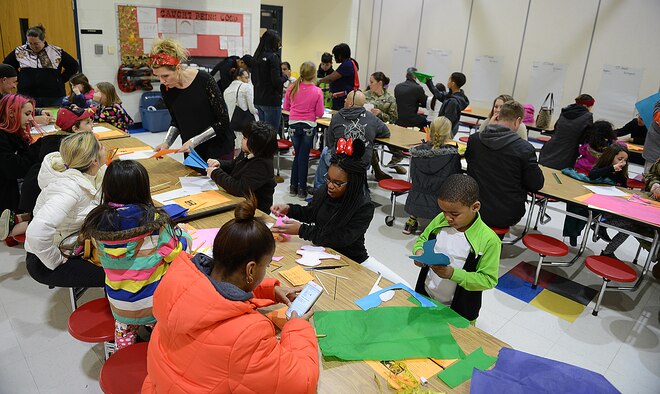
Image result for math classroom
An inquiry model does not require a student to "construct" their understanding of a concept and then leave it at that. The basic lesson has three parts: a minds-on section in which a problem that builds upon prior knowledge is introduced and students are asked to think about how they would go about solving it; an action section in which students collaborate and share their ideas, applying them to a new problem or problem set that extends the concept, with the same concept; and then a consolidation phase in which students share their work. Various approaches used by the students and introduced by the teacher as needed are compared and evaluated for clarity, consistency and efficiency. This phase is where the students consolidate their learning. Students are often asked to complete a new problem or problems using the concept as an "exit ticket" to show their understanding. The teacher uses these to determine the next steps needed for the class, as well as individual students, in order to further their learning.

In subsequent lessons, students are also asked to apply their mathematical understanding in various hands-on ways, which might include projects built in maker spaces, coding, or geometric art.

Taking a lesson to look at mistakes every now and then is also common. Students are asked to look at a teacher-chosen problem and solution, and demonstrate why the reasoning used is not correct. The ideas are that in learning from mistakes, students realize that making mistakes along the way is part of the process, and it also encourages them to work on their own mathematical reasoning skills and means of communicating their mathematical thinking.

What is missing from this approach? Memorization of an algorithm and repeated practice. Memorization of an algorithm provided by the teacher, with detailed steps on how to complete the algorithm, is what many adults equate to math instruction. It is what is familiar to them, since many learned it this way. However, simply knowing the times tables and how to do long division alone do not make a person numerate, any more than knowing the alphabet and phonetic sounds makes someone literate. Maybe you can sound out a simple word, but to gain meaning from the text requires comprehension skills. This is also true of math.


It is true that memorization of times tables helps with the quick completion of worksheets in higher grades. Computation abilities are still important. Even though we have tools everywhere that can complete this with greater speed and efficiency than people can, being able to process these smaller steps with ease and fluency frees up working memory needed to manipulate more complex problems. However, we do have computational tools (calculators, electronic devices, computers), so placing our priorities on those computational skills alone is not beneficial and does a disservice to our students. We need students who are able to apply those concepts, program the computers, choose a strategy, solve problems, make connections, find patterns and apply and extend those patterns, plan and strategize. We need to prioritize higher-order thinking skills that allow us to move beyond basic computation. Students need to develop a sense of number, quantity, additive and multiplicative reasoning, proportional reasoning, patterning, balance, spatial reasoning, estimation skills and so on.

To remain stuck at memorization of number facts and algorithms alone is simply not enough.

Practice is one area that in my opinion could use more balance. We have gone from reams of worksheets, usually all of a single problem type that does not require reflective thought, to the use of 1-3 problems in a day to illustrate a concept. Somewhere in the middle is a place where students have a chance to work on problems that reinforce a concept while being required think critically and strategize, not only with the algorithm of the day, or by matching a pre-determined vocabulary list with a given operation, but in visualizing and manipulating the information given until they make sense of it, then applying an appropriate strategy and computation for solving it. Students need to also be encouraged to search for and find the answers to the age old question, "(when) will we ever use this?". If they don't see a purpose in it, how can we expect them to find the motivation to struggle through a problem or concept? The purpose must be clear.

Another recent push in education is the concept of developing a Growth Mindset, as described by the work of Carol Dweck, and elaborated upon by Jo Boaler. The ideas here are that students need to be open to learning, and accept that there will be some struggle when they are truly learning, but that they are capable of working through this struggle to gain competency. This is especially important in math, since there are many myths that abound about people having a "math brain" or not having one, which is simply not how brains work. While we'd never shrug off being illiterate, common phrases and ideas such as "I'm not a math person" and "you must be so smart to understand math" show how our society reflects an idea that numeracy is out of reach for many people. If students are to learn math, they need to first believe that they can learn it, and the adults around them need to also believe they can.

Tuesday, 17 September 2013

The Latest False Dichotomy in Education

Years ago when I was a student teacher, there was a battle of sorts being waged in the language arts curriculum: the phonics vs. whole-word approaches to teaching reading. On one hand, students were asked to sound-out all words they did not know, and on the other, students were asked to memorize thousands of words. Reality: fluent readers use a variety of techniques including but not limited to the ones espoused by such methods. When some people tried to call this approach "whole language" it created confusion as many missed the difference between "whole word" where individual words are memorized out of context with 'whole language" in which context, along with phonics and sight words is an important component.

Many moons later, we see a similar battle being waged in the teaching of mathematics. 

There are the traditionalists who value "sage on the stage" and "drill and kill" methods in which students memorize algorithms and focus on answer-driven tests. Students become walking calculators, and weaker students are often left without the conceptual understanding to allow them to know when and how to apply these algorithms to solve everyday problems. Mnemonics such as "Yours is not to reason why, just invert and multiply", "FOIL" (which only works for up to two terms), and what I've only recently discovered, the "butterfly method" for multiplying fractions are examples of how conceptual understanding is replaced with memory tricks in order to gain a correct answer on a standardized test.

Then there are the constructivists who believe that students must create their own knowledge set through experimentation. They offer an overwhelming range of options for students to explore, but often neglect the final stages of consolidation and review, as well as time for practice with additional problems. Critics argue that since it took centuries to develop the fields of mathematics, expecting students to "reinvent the wheel" is a waste of time for everyone. Such teaching can also be time-consuming, and students who are struggling can become overwhelmed and confused with the large variety of methods to solve a given problem.

Again, just as in the reading example, the polar extremes reflect a false dichotomy when it comes to learning.

Since there seems to be a reluctance for educators, policy makers and the general public to consult the literature, examine what we know about cognitive development and read the studies, there becomes a tendency to grasp onto the methods one is familiar with and hold these as sacred. In many cases in North America, this means that the traditionalist methods are held in higher regard than the constructivist methods. Looking to other countries that tend to do well in mathematics, there are some interesting cultural differences that appear in the approach to teaching and evaluation. One example can be seen in this video with Phil Daro http://vimeo.com/30924981.

In the middle, is student inquiry (again, the name is often used as a substitute for pure constructivism, which causes confusion) in which students are encouraged to try out problems using whatever means they can, discuss the various methods that worked and didn't, share and yes, memorize the methods that work consistently, and connect these methods and patterns to problems they encounter in everyday life. There is structure to the lesson, but there is also a place for students to work with problems on their own terms, experiment and make connections with prior learning. Lessons are scaffolded so that they build on concepts already mastered. Consolidation happens with the whole class and is reviewed again at the start of the next lesson. Students still memorize times tables and formulas, but they also understand where these come from and what is happening with them. They can use a matrix to show multiplication and can tell you why ax + by + c= 0 is a different way of showing y=mx +b, and how various different values of "m" will change the slope of a line when graphed. They can relate this to situations in their everyday life. They know what to do when confronted with 
(2x + y)(3x +2y -z)
 because they have learned the underlying pattern of how this works, rather than just a convenient but limited mnemonic. The understand that BEDMAS is an mnemonic shortcut that helps them use the distributive property, and that the multiplication/division are interchangeable as are addition/subtraction.
Without context, understanding of the underlying pattern, and sufficient understanding to apply the concept widely, a math student's abilities are no more useful than a calculator, and are likely much slower at that. We need people who can not only calculate, but choose the appropriate algorithm and problem-solve in a variety of situations. We need people who understand how to program the algorithms in the first place. Math is not a religion to be taken on faith; it is a science that stands up to scrutiny. We would do well to remember this as we approach the subject in the classroom.

Students learn by doing and thinking, by struggling through problems. When this is connected to their everyday experiences, it becomes meaningful. If we can recognize this in other subject areas, then why not in math?


Wednesday, 14 August 2013

Working Backwards

Looking through many resources in preparation for teaching math in the school system, there seems to be a very common pattern that is rarely broken: introduce algorithm, apply it to increasingly difficult pre-determined problems, review, then tack on a "real life" or "word" problem to add application as almost an afterthought. Some resources even skip this last step, and few indeed involve proofs, aside from a couple that show how to derive the quadratic equation.

In mathematics, we have a tendency to ask students to accept algorithms without question or debate. We essentially eliminate critical thinking from our teaching.


This is not the way teachers are trained in my province, yet many resources that are used in our classrooms still follow this sequence, and many teachers drift toward this in their practice. The emphasis remains on the lower levels of Bloom's Taxonomy at the expense of activities that promote higher-order thinking. In my review of the literature, it appears that teachers are most likely to work in this direction for two reasons: this is the way they were taught, and their comfort level with the curriculum is low.

When I say their comfort level is low, I do not mean that they do not necessarily hold a deep conceptual understanding of the topic, but that for various reasons (most often relating to allotted classroom time), they feel the need to get the basics covered as quickly as possible, and for many, teaching algorithms is how they view "the basics" when it comes to math.

But what if we were to reverse this direction, and start with the applied problem?

Critics say that this leaves students high and dry, with the need to reinvent conceptual knowledge that took mathematical superstars many years to develop. They say it leads to confusion when the approach they might try is not the most efficient method.

However, no one is saying that we withhold the algorithms from the students, only that we let them think about the problems that lead to them in order to foster a sense of pattern and deeper conceptual understanding of the processes involved in applying mathematical thinking.

All the memorized algorithms in the world are useless if students never learn when or how to use them outside of math class or standardized testing.

Sure, it takes a little more time for students to think through the "why" of a problem, but feeding them algorithms to memorize and apply does students a disservice. Computers can work through algorithms, and they do it faster and more accurately than people. What we need are people who can reason mathematically, and this requires that we provide a space for applied problem solving and reflection.

It is my gut feeling based on what I've seen with the students I've worked with that students who develop applied problem solving skills aka mathematical reasoning skills, begin to make deeper connections quicker with later topics. In this way, the time invested at the outset may offset the time needed to cover later related topics.

For teachers to abandon the chalk-and-talk and promote these skills will take a leap of faith. It is much more comfortable to stay with the known, particularly when there is a perceived crunch in terms of curricular content demands and the allotted classroom time to cover it. Students may resist since they are used to being given the entire topic at the outset. People tend to resist change.

How many times have we heard the question from our students, "When will we ever use this?". Students, particularly those for whom math does not come easily, need to understand this in order to invest their time and effort accordingly. Resources like this one: 101 uses for a quadratic equation and this one: "Why study math?" can be good places to start. Starting with a relevant real-life problem is also an effective way to connect theory with application.

I issue the following challenge to all teachers who read this blog: choose one topic this year to present this way and see how it goes. Start with a real-life problem, challenge students either individually or in groups to devise a way to tackle it, and share results using Bansho or another similar method in which the different approaches can be grouped in a meaningful way. Discuss which ones work and which don't and why. Finish with a review of those ways that work best. Follow up with some practice problems.

Did you or your students resist? What challenges did you face? Did different students participate than usual for your class? How might you use this to best encourage mathematical reasoning in your students?


Sunday, 16 June 2013

Wait...There's an App for That!

We've come a long way in a short time when it comes to electronics and digital literacy. Every classroom it seems has a flock of iPads or tablets available to students. Those with various learning disabilities are now enabled through the use of software programs that convert voice to text, text to voice, use word prediction to aid spelling and grammar, and graphic organizers to help students organize their ideas. This helps students who are bogged down with mechanics to comprehend, convey and organize their ideas. These are positive uses of technology that encourage students to gain skills so they can complete assignments independently. They are enablers.

Online resources including courses such as Coursera, Open University and tutorials such as Khan Academy, have been valuable supplements to students. The sheer volume of excellent resources available online is staggering.

On the flip side, I have seen classrooms taken over by the latest and greatest technology in less positive ways. In the name of "digital literacy", students are given time to work with various gadgets, games and software packages for the sole purpose of learning how they work. It doesn't take long to learn that not all online learning opportunities are worth the time and money spent.

I fear that often in the name of technology, important developmentally appropriate experiences are lost. If there is a hands-on way to involve students in the same topic, this should take priority over additional screen time as should any active learning opportunity which involves all of the senses and actually physically "doing" and manipulating things, particularly with younger students. Multi-sensory experiences allow students to take in information in a variety of ways and experiment in concrete ways not possible using computers or devices. Tactile information at the very least is lost when finger-painting is replaced with "less messy" painting apps or drawing programs.

Some teachers feel pressure to try and compete with the frenetic pace and stimulation of popular media. However, a place of learning often required calmness and a feeling of safety that is quite different from that kind of stimulation.

 Exploration is an excellent teacher, this is true, but we need to ask ourselves some questions before we devote large amounts of time and money to such activities


  • Is this an open-ended or closed activity? Exploring with MIT's Scratch programming is open-ended; solving quests such as Oregon Trail, Carmen Sandiego are closed as there is a single solution and students must follow a single path; there may be a good case for occasionally using a closed game, but for the most part, students will have more learning opportunities with open-ended options?
  • Are there assigned or agreed upon specific challenges to students in using the technology?
  • Is there a way for students to share their discoveries in a meaningful way with other class members?
  • Can any of these goals be met through non-electronic means? Is there a compelling reason why this learning should happen through the use of electronics? Learning to type and tweaking a computer program are activities best done on a computer; using math manipulatives and painting a picture work better with hands-on tactile feedback.
  • Is there a clear set of learning objectives or goals for the time your students spend with technology?
  • Is this the most efficient and logical way for the students to work on the topic?
  • Does this lesson involve higher-order thinking? Many "educational" games are simply more drill, but with animated characters & sound bytes. This might appeal to some students, but spending large amounts of time on such activities is generally not time well spent.
  • Have you discussed online citizenship prior to online work? 
  • Are there clear rules and guidelines for use of personal devices in your school and classroom?
  • Have you discussed how to determine the validity of online sources when research is involved?
  • How does the quality of understanding as well as the finished product compare with that taught without electronics--is the Power Point or Prezi project as detailed and comprehensive as the traditional project booklet, the billboard-styled project or the dramatic presentation?
  • Is this technology likely to carry on through the student's academic and later life? Spending an hour trying to get a game to work might not be time well-spent; whereas spending an hour teaching a disabled student how to work with Dragon (voice to text) software may carry through for many years
  • Excessive use of graphics, particularly moving graphics, can be visually distracting to some students and may make it difficult for them to focus on the task at hand--is the program or app too "busy" and full of non-essential information to serve some or all of the students involved?
  • Do your expectations include the use of computers, internet resources and/or personal devices outside of the school setting? Many students do not have ready access to these and must travel to a library, which is not always a reasonable expectation on the part of teachers due to varying home circumstances. This is important to keep in mind when grading assignments as well.
  • For administrators and trustees: is this the best way to spend educational funds? Each case should be examined independently and free from corporate influences. While the presence of electronics in the classroom may appear impressive to parents, it is important that educators communicate the current state of developmental research to parents when such decisions are made. Corporations have the advantage here.
  • In general: is this the best way to go about helping students achieve the specific learning outcomes for this topic?

There has long been a bias of some teachers to assign higher marks to projects that involved electronics in some way than those that didn't. This puts some students, particularly those without home access to devices and the internet, at an unfair disadvantage. Being clear regarding expecttions in your rubric or marking scheme ahead of time and remaining firm with those requirements may help reduce such bias.

In general, if we remember treat electronics as tools rather than the end in and of itself (except perhaps for programming, learning about the structure of the internet, media studies and learning about the specific electronics involved), the use of technology will be an aid rather than a distraction for learning. Otherwise, it can become a barrier to learning in terms of both classroom time, and in making the best use of limited educational funding.

Balance is important. In some homes, students are given free reign with screen time and may not get much time to be outdoors exploring, or doing other hands-on activities. Many students can name hundreds of brand-names and less than a dozen native species. In school, at least, there should be an attempt to encourage students to develop as well-rounded individuals. Replacing crucial activities such as arts and outdoor education with more screen time can create bad habits for life. When balance is encouraged, students may learn positive, healthy habits that carry through the rest of their lives.


Sunday, 21 April 2013

Science as Science Does--Some Food for Thought

I have a confession to make: I may have gotten it all wrong.

On an email list I belong to, there was recent discussion about the difference between "recipe science" and "actual" (research-driven) science. This, along with observations I made at the regional science fair in my area, has made me reflect on the subject, along with the general state of science education in Canada (and North America).

I have also been thinking about the Lemonade website and it's focus that certainly leans towards recipe science rather than experimentation.

Sound pedagogy seems to once again butt up with my urge to create and share activities. Looking through my various science pages, there is a great deal of material. It is very hands-on, which is a good thing, but it also tends to be quite prescriptive. Where open-ended exploration, questions and experimentation should be, instead there are detailed steps to complete activities that others have already done.

It isn't always a bad thing; learning concepts through doing can be a great starting point, but it isn't the way science is done either, and it isn't the way children learn best.

About a week ago, I added a Science Fair Guide page to the site in order to allay my guilt in the hopes that it would help visitors make the move from more comfortable activities, such as those found on my Edible Science page into more creative and experimental research-driven science. It's a start, but I've been thinking more about the problem and I know there is more to do.

We have a growing tendency as a society to do more and more things "for" our kids than past generations. Safety, while very important, has caused us to reduce the amount of play and open-ended exploration our children experience. Perhaps all the prescriptive activities in school are a symptom of this trend. 

There is another explanation however, and that is that it is easier for teachers who may not be as comfortable with science to create lesson plans based on predictable activities than on serious inquisitive research. Given the increasing demands of standardized testing, this becomes even more of an issue since open-ended learning can be messy and time-consuming. Certainly more is learned through open-ended learning, but there is a marked lack of certainty that the kind of learning students experience will show up on the test. Knowing the concepts and the results ahead of time means a teacher can match up the activities with the test; it is not the way science is done, but it does comply with the demands of test preparation.

Science class traditionally involves a lesson, a lab in which students replicate a prescribed "experiment", and a written lab report. In the elementary years, it is sometimes even more removed as students watch a teacher (or a video of a teacher) perform a demonstration. Some more progressive schools also have science fairs in which students are encouraged to do their own research and experimentation, however, this is often considered an "extra" and is not the way the majority of classes are run.

Having said that, there are fantastic teachers out there who are willing to take risks to ensure their students learn well, such as this teacher whose grade two class studied bee behaviour and even had their research published in Biology Letters. This shows that not only is it possible to teach science in an open-ended manner, but that this can be at a high level with young children.

Consider the fact that children naturally learn in much the same way as scientists perform research:
  • they explore
  • they ask questions
  • they test hypotheses
  • they try different approaches
  • they problem solve
  • they adjust their activities based on their current level of understanding
So much of what we do as parents and teachers instead involves "showing" and "sharing" rather than encouraging children to take a more active approach to their learning. Science, which could be the easiest subject for young children to explore naturally, is often presented as a pre-packaged activity instead.

I am guilty of this, particularly through my website.

Solutions

The good news is that there are some simple solutions to this problem. It is pretty easy to adapt an activity into an exploration, for instance. Take the very popular silly putty (aka "flubber", "slime" or "gak" etc.) recipe from my site.

By experimenting with different proportions of ingredients, different glue types etc. this can become more of an exploration and discovery-based activity than an end-product focused science craft. 

Another type of activity on my site involves building a model, such as in this rubber-band racer activity. Experimentation can come through varying the body shape and proportions, trying out different lengths and thicknesses of elastics, using different materials for the body, etc. The speed and the distance traveled in different conditions can then be compared.

These are just a couple of examples, but this sort of experimentation can be applied for many of the activities on my site. 

By using examples such as this, it becomes easier to make the transition from prescriptive activities to authentic, original research for teachers and parents who find science to be beyond their comfort level. In fact, this is the way I originally imagined my site would be used, but I see that my presentation has become more prescriptive over time. As I update pages, I will work on this issue. 

Ideally, students will learn how to explore, ask questions and use sound scientific methodology to create and perform experiments to help them learn more about a topic. This is a far cry from following a list of steps to create a replica of a past experiment.

To be clear, there is value in replication, and it forms a vital role in scientific research, but when this is the only aspect of science we encourage in our classrooms, everyone loses.


Monday, 29 October 2012

Why I Hate Flashcards

Way back in the 1970's, I was a student in a grade 1-2-3 split class. It was not a small school, so I would guess that it was one of the many educational experiments going on during that time.

There are two things I remember well about my grade 1 teacher: how hard she spanked and her incessant use of flashcards. The words, "if you're so smart..." still set my teeth on edge. I didn't think I was smart at all. Before we could read actual stories, we each needed to recite the current list of flash-words correctly, even though they were completely out of context. Only then, when we were tired and bored out of our minds, would we have the "privilege" of reading aloud in front of the class a page from the classroom reader. That classroom reader, "Just For Fun", was decidedly NOT fun for me!

It may be that I have an unfounded bias against flashcards based on my experiences with that teacher.

But aside from those experiences, there is a lot to be said against "flashcard" style instruction. Rote and memorization techniques do not involve any higher cognitive functioning; there is no deep thought involved in memorizing a set of facts. There is no "grey area" to be explored or probed; there is no room for reflection or making connections with other areas. It is a sort of "desert learning" where only that particular piece of information is deemed relevant. For those familiar with Bloom's Taxonomy, you will recognize that flash cards represent remembering, which sits at the bottom of the list as the lowest of the lower-order skills.

Bloom's Taxonomy
Yes, there are some facts that simply beg for memorization, such as the alphabet, musical note names, capital cities, etc. For these purposes, flashcards may not be a bad choice. Likewise, some older students find writing facts out on index cards and reviewing them to be a useful study tool that combines kinesthetic (writing) and visual cues.

For math facts though, it is crucial that students work through the actual quantities to understand the patterns involved. These do not show up on flashcards; nor do "real life" applications of the concept. 9 x 9 can be solved in many different ways, and for students to gain numeracy they must be encouraged to explore those ways for themselves. Some ways they might do this can be found here. Only once they have gained the concept, the "understanding" and "applying" on the next levels of Bloom's Taxonomy, is memorization relevant. This doesn't mean that a student who learns the concept quickly should need to continue working with manipulatives ad nauseum, but that they should be able to demonstrate the concept behind the fact before moving on.

The same goes for reading. Using flashcards to memorize words deprives students of many of the other different ways to decode and comprehend words and phrases. There are many aspects used in reading including contextual clues, phonics, word shape, structural patterns, linguistic patterns, and many others as well. Not many of us have the mental capacity to memorize every word we will ever read; we clearly need to  use a variety of strategies in order to become fluent readers and gain higher level literacy skills. Isolating one skill and focusing on that alone (usually either flashcards or phonics) does not reflect the reality of how readers process print. It is true that it might be useful for students with specific needs to reduce the visual or auditory component for a very short time in order to allow them to focus on specifics, but the students who require this sort of breaking down tend to have special needs related to sensory issues; and their needs are quite different from the needs of the general student population.

Going back again to the musical note example, could we not improve the experience by making it richer with a wider variety of sensory input? Imagine a simple program that not only shows the note written on the staff, but also plays the tone. Now the student has an opportunity not only to learn the note visually, but also to gain an auditory sense of it at the same time. This is not a complicated thing to program, in fact, there are many websites, programs and apps that do this that have been around for years. If you want to avoid electronic technology, you can always do this with a piano or other instrument as well. Of course, you can also take this much further by reversing the process, and add composition, duets, etc. to the mix. None of this is new.

This is only one example. I challenge those of you who use flashcards to find a replacement or means of enriching the experience.

Thursday, 11 October 2012

Educational Ideals Part 3: The Educational Setting


In creating an ideal setting, there are three things that need to be considered in order to make this model work in the best manner possible: the teachers, the students and the vision/mission statement.

The Teachers

Teachers need to be well educated in human development. A single course in developmental psychology is not sufficient to accomplish this. Teachers need to understand through research as well as direct observation and discussion how children of different ages naturally learn and grow. They need to understand the basis for language acquisition, numeracy, and abstract thinking. They need to understand what, how and when various milestones are reached. They need to understand cognitive development in order to encourage the student and adapt the environment appropriately.   When a teacher understands human development, that teacher is able to apply this knowledge, recognize the behavior patterns of students, and encourage them at the appropriate level.
This also allows teachers to better identify learners who have unique needs and to help to meet these needs. As it stands now, many teachers in the system have no background in special education whatsoever. This needs to change.
All too often, the developmental aspect of teacher training is neglected and teachers are given courses in subject matter instead. While every teacher should be well-versed in his or her specialty subjects, this should not be done at the expense of a thorough understanding of development. Understanding of the subject matter should be the main focus of the undergraduate degree; the teaching degree should focus on development. We need to teach students, not subjects.
Only once prospective teachers have an understanding of development should they begin to work on practical classroom strategies.
Our society has a bad habit of looking down on the teaching profession. Teachers are not treated as professionals with a great deal of responsibility, but rather as fancy babysitters, at least by some. Teachers are professionals though, with five or more years of post-secondary education. They are responsible for the education of the coming generation, which is something that will carry a lasting effect for decades to come. The effects of a good teacher can be felt through the community. By supporting our teachers, treating them as professionals and expecting professionalism from them, we will help to elevate the image of the profession, attract the best possible teachers to the profession, and provide the best possible future for our children.
Institutions such as the Ontario College of Teachers can help foster this improvement, by holding teachers accountable, supporting professional development, and by fostering communication and sharing of techniques, strategies and visions that work. Gaining and maintaining dialogue among educators is a challenge we must undertake in order to improve our educational system. All too often, teachers, especially newer ones, are left to their own devices and must “reinvent the wheel” when there are many teachers out there who have been there and can share their own valuable experiences. We need to budget time for such dialogue. We also need to maintain a dialogue between educators and the general public. There are many misconceptions regarding teaching that could be easily dispelled through better communication with the general public.

The Students

By emphasizing an understanding of human development in teacher training, students can become the focus of education. It may sound silly to say this, but all too often we are caught up in pedagogy, politics, pre-defined curriculum and policies that we lose sight of the real reason we are here: the students.
There is a tendency to view students in financial terms: as commodities, customers, consumers or investments in the future. Many of us come to education with an agenda of sorts, including social justice, power or control (never a good reason to work with others!), idealism, a quest for a sense of immortality by empowering students for the future, or any number of other reasons. We need to be honest about these, and then let them go. Our own agendas have no business here. I know that even that statement is an agenda of sorts, but once the students arrive on the scene, it is one that is easily transferred to them. If we are to encourage our students to become active, engaged critical thinkers who seek out lifelong learning, we need to empower them and rescind our own control in order to foster their growth.

The Learning Environment

My own ideal for a learning environment would be a mixture of Reggio Emilia and the Sudbury-style schools, with some elements of Waldorf, Montessori (as Maria herself described—not the modern variations), The Teacher Tom’s approach, and even “Maker Sheds” such as KWARTZlab.
There would be indoor and outdoor spaces in which to learn and explore, with spaces created for individual, small group and large group work. 
Play and open exploration would take priority over structure, although there would be a “rhythm” to each day and each season. This would continue through all ages with materials and mentors being available for students based on student interests. Students would have regular counseling sessions with an advisor group to ensure they were on track to meeting their own goals, and these goals would include academics, creative pursuits, physical development (fine and gross motor skill development), spiritual growth (philosophical, social), and general well-being (including physical and mental health). Students would be encouraged to arrange additional mentorships and forge connections with various experts and professionals as they became able to do so. Research would be paramount, from exploring caterpillars to viewing distant galaxies, and everything in between. Students would be encouraged to collaborate and also to share their work with other students of different ages and experiences as a means for fostering in communication skills necessary in most fields of endeavour. Age would be no barrier for learning; all limits would be based on ability, aptitude, physical limitations (ie. if you cannot reach the knobs, you cannot use the stove) and any applicable legal limitations. Students with special needs would have access to the mentors they need in order to work towards their potential. Since all abilities would be mixed, yet each student would determine their own pathway, tolerance would be encouraged through a non-competitive atmosphere. Older students would have an opportunity to mentor younger students without being compelled to do so.
The role of the teacher would become a facilitator. The teacher would provide links to resources and opportunities, be there to bounce ideas off of, ask open-ended questions to encourage students to stretch their limits, and help students create long and short-term personal goals and plan towards them.
The school would be similar to a Sudbury school, except the teachers would take a slightly more hands-on role, and the students would be required to explain their choices and review and update their goals on a regular basis.
The role of the teacher would be more demanding because it would require monitoring of a wide variety of topics and projects, and also a monitoring of available outside opportunities that might be of relevance to the students, such as college/university courses, contests, science fairs, performances, community events, gallery showings, etc.
Since the reporting would be based on portfolios, there would be little testing involved. Anecdotal reports, notes from counseling meetings, goal setting and reviews and physical projects would form the bulk of the assessments.
Some challenges would include the use of space, supervision, communication with community resources including mentors, lab / workshop access, apprenticeships, and co-ordinating with online and college/university programs. Working with less imposed structure demands a great deal of organizational skill on the part of the facilitators, and this would need to be recognized in advance. Excellent and regular communication between the teachers as well as the administration and older students would be imperative.
Some people are bound to balk at the idea of less structure, but after much research as well as some 24 years of experience in education, I believe that this is in fact the best and most effective learning environment possible. It fosters the natural learning patterns of young children, provides a stimulating environment in which to explore ideas, and feedback in order to adapt and learn in an ongoing fashion. Learning to make and set goals, then to follow up with them from an early age will help foster study skills, time management and also enable students to make connections between their goals and the foundation skills needed in order to attain them. Support from teachers who act as facilitators and educational counselors will help students work out their own learning pathways while providing support as needed. When the learning is relevant and comes in an order that is logical to and for the learner, it becomes deeper and better learned. The student values it and understands its relevance, and can be free to embrace it.