Showing posts with label curriculum. Show all posts

Monday, 11 September 2017

Here We Go Again...

Image result for math classroom canada

Every couple of years we see a huge public outcry about how we need to "go back to basics". Sometimes this is in response to test scores being "below average". Here I will (once again) weigh in on this.

Because most people have spent years in classrooms, they feel like they are qualified to weigh in on educational policy. They appeal to politicians who are not likely to have a background in education or psychology. However, the fact that Canadians are concerned about and value education is something that we can definitely be proud about.

Several news agencies have recently published articles calling for a "back to basics" approach to mathematical education. But what exactly are "the basics"? Are we speaking of numeracy, or simply a fluency with basic number facts?

Many opinion pieces cite methods such as Dewey's constructivism used in the current approaches. What is actually being taught in teacher education is inquiry learning, which shares some features with constructivism, but is not entirely the same thing.
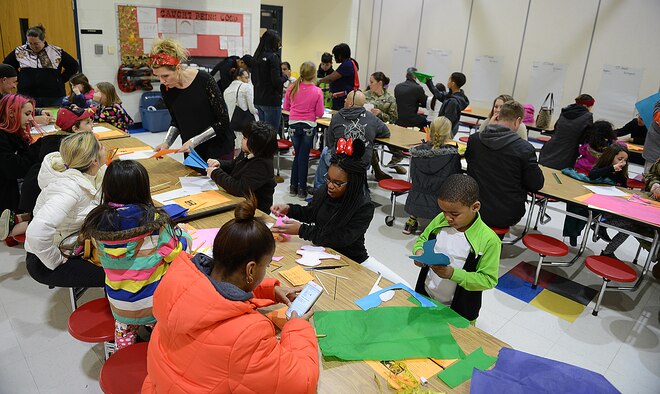
Image result for math classroom
An inquiry model does not require a student to "construct" their understanding of a concept and then leave it at that. The basic lesson has three parts: a minds-on section in which a problem that builds upon prior knowledge is introduced and students are asked to think about how they would go about solving it; an action section in which students collaborate and share their ideas, applying them to a new problem or problem set that extends the concept, with the same concept; and then a consolidation phase in which students share their work. Various approaches used by the students and introduced by the teacher as needed are compared and evaluated for clarity, consistency and efficiency. This phase is where the students consolidate their learning. Students are often asked to complete a new problem or problems using the concept as an "exit ticket" to show their understanding. The teacher uses these to determine the next steps needed for the class, as well as individual students, in order to further their learning.

In subsequent lessons, students are also asked to apply their mathematical understanding in various hands-on ways, which might include projects built in maker spaces, coding, or geometric art.

Taking a lesson to look at mistakes every now and then is also common. Students are asked to look at a teacher-chosen problem and solution, and demonstrate why the reasoning used is not correct. The ideas are that in learning from mistakes, students realize that making mistakes along the way is part of the process, and it also encourages them to work on their own mathematical reasoning skills and means of communicating their mathematical thinking.

What is missing from this approach? Memorization of an algorithm and repeated practice. Memorization of an algorithm provided by the teacher, with detailed steps on how to complete the algorithm, is what many adults equate to math instruction. It is what is familiar to them, since many learned it this way. However, simply knowing the times tables and how to do long division alone do not make a person numerate, any more than knowing the alphabet and phonetic sounds makes someone literate. Maybe you can sound out a simple word, but to gain meaning from the text requires comprehension skills. This is also true of math.


It is true that memorization of times tables helps with the quick completion of worksheets in higher grades. Computation abilities are still important. Even though we have tools everywhere that can complete this with greater speed and efficiency than people can, being able to process these smaller steps with ease and fluency frees up working memory needed to manipulate more complex problems. However, we do have computational tools (calculators, electronic devices, computers), so placing our priorities on those computational skills alone is not beneficial and does a disservice to our students. We need students who are able to apply those concepts, program the computers, choose a strategy, solve problems, make connections, find patterns and apply and extend those patterns, plan and strategize. We need to prioritize higher-order thinking skills that allow us to move beyond basic computation. Students need to develop a sense of number, quantity, additive and multiplicative reasoning, proportional reasoning, patterning, balance, spatial reasoning, estimation skills and so on.

To remain stuck at memorization of number facts and algorithms alone is simply not enough.

Practice is one area that in my opinion could use more balance. We have gone from reams of worksheets, usually all of a single problem type that does not require reflective thought, to the use of 1-3 problems in a day to illustrate a concept. Somewhere in the middle is a place where students have a chance to work on problems that reinforce a concept while being required think critically and strategize, not only with the algorithm of the day, or by matching a pre-determined vocabulary list with a given operation, but in visualizing and manipulating the information given until they make sense of it, then applying an appropriate strategy and computation for solving it. Students need to also be encouraged to search for and find the answers to the age old question, "(when) will we ever use this?". If they don't see a purpose in it, how can we expect them to find the motivation to struggle through a problem or concept? The purpose must be clear.

Another recent push in education is the concept of developing a Growth Mindset, as described by the work of Carol Dweck, and elaborated upon by Jo Boaler. The ideas here are that students need to be open to learning, and accept that there will be some struggle when they are truly learning, but that they are capable of working through this struggle to gain competency. This is especially important in math, since there are many myths that abound about people having a "math brain" or not having one, which is simply not how brains work. While we'd never shrug off being illiterate, common phrases and ideas such as "I'm not a math person" and "you must be so smart to understand math" show how our society reflects an idea that numeracy is out of reach for many people. If students are to learn math, they need to first believe that they can learn it, and the adults around them need to also believe they can.

Wednesday, 14 August 2013

Working Backwards

Looking through many resources in preparation for teaching math in the school system, there seems to be a very common pattern that is rarely broken: introduce algorithm, apply it to increasingly difficult pre-determined problems, review, then tack on a "real life" or "word" problem to add application as almost an afterthought. Some resources even skip this last step, and few indeed involve proofs, aside from a couple that show how to derive the quadratic equation.

In mathematics, we have a tendency to ask students to accept algorithms without question or debate. We essentially eliminate critical thinking from our teaching.


This is not the way teachers are trained in my province, yet many resources that are used in our classrooms still follow this sequence, and many teachers drift toward this in their practice. The emphasis remains on the lower levels of Bloom's Taxonomy at the expense of activities that promote higher-order thinking. In my review of the literature, it appears that teachers are most likely to work in this direction for two reasons: this is the way they were taught, and their comfort level with the curriculum is low.

When I say their comfort level is low, I do not mean that they do not necessarily hold a deep conceptual understanding of the topic, but that for various reasons (most often relating to allotted classroom time), they feel the need to get the basics covered as quickly as possible, and for many, teaching algorithms is how they view "the basics" when it comes to math.

But what if we were to reverse this direction, and start with the applied problem?

Critics say that this leaves students high and dry, with the need to reinvent conceptual knowledge that took mathematical superstars many years to develop. They say it leads to confusion when the approach they might try is not the most efficient method.

However, no one is saying that we withhold the algorithms from the students, only that we let them think about the problems that lead to them in order to foster a sense of pattern and deeper conceptual understanding of the processes involved in applying mathematical thinking.

All the memorized algorithms in the world are useless if students never learn when or how to use them outside of math class or standardized testing.

Sure, it takes a little more time for students to think through the "why" of a problem, but feeding them algorithms to memorize and apply does students a disservice. Computers can work through algorithms, and they do it faster and more accurately than people. What we need are people who can reason mathematically, and this requires that we provide a space for applied problem solving and reflection.

It is my gut feeling based on what I've seen with the students I've worked with that students who develop applied problem solving skills aka mathematical reasoning skills, begin to make deeper connections quicker with later topics. In this way, the time invested at the outset may offset the time needed to cover later related topics.

For teachers to abandon the chalk-and-talk and promote these skills will take a leap of faith. It is much more comfortable to stay with the known, particularly when there is a perceived crunch in terms of curricular content demands and the allotted classroom time to cover it. Students may resist since they are used to being given the entire topic at the outset. People tend to resist change.

How many times have we heard the question from our students, "When will we ever use this?". Students, particularly those for whom math does not come easily, need to understand this in order to invest their time and effort accordingly. Resources like this one: 101 uses for a quadratic equation and this one: "Why study math?" can be good places to start. Starting with a relevant real-life problem is also an effective way to connect theory with application.

I issue the following challenge to all teachers who read this blog: choose one topic this year to present this way and see how it goes. Start with a real-life problem, challenge students either individually or in groups to devise a way to tackle it, and share results using Bansho or another similar method in which the different approaches can be grouped in a meaningful way. Discuss which ones work and which don't and why. Finish with a review of those ways that work best. Follow up with some practice problems.

Did you or your students resist? What challenges did you face? Did different students participate than usual for your class? How might you use this to best encourage mathematical reasoning in your students?


Friday, 22 June 2012

Geography Games

Photo source: NASA (posted on Wikimedia Commons)
If you follow my educational posts, you may have noticed that we play a lot of games. This is intentional. When children play, they explore and learn. Learning is natural and child-driven. Our adult agendas often serve to slow down learning, despite our good intentions of focusing on skills development. When we lighten up and embrace children's own natural ways of learning, we can become partners and guides.

Having said that, sometimes our society works such that kids need specific information at a specific time. Geographical knowledge is one example of this, although the subject might easily come up on its own after watching a documentary, trying out a new restaurant, or meeting a neighbour from a different land. Since most of us cannot afford to travel the world and explore many places in person, a few games may be in order.

For those of you who are hooked on integrated unit studies (I am, although my children do not like to learn this way), I have included some ideas for one at the bottom of this post.


Alphabet Geography

Needed:
either alphabet dice, such as those found in Boggle, or slips of paper each with a different letter of the alphabet kept in a container that can be shaken
a world map with location names (or a more detailed country, province etc. map depending on your intended focus)
note paper and pencils or laminated lined paper with wipe-off markers
optional: a timer

Choose a letter by rolling a dice or selecting a slip of paper. All players must write down as many place names as possible that start with that letter. When the time is up (3 minutes recommended), players check their answers against the map. If a player cannot show where one or more of their selections is located on the map, that selection does not count. Award a point for each correct place. Play for several rounds, over several days. The first game is the baseline. A player wins by gaining a higher score than their most recent game. Overall winners at the end of the series are those who have scored the highest cumulative amount, OR who have the highest final score, depending on the needs of the group.

Where In the World Am I?

Students use their understanding of cultural and physical features of places to aid teammates in figuring out their mystery location.

Needed:
Large and detailed World Map
various atlases, cultural, ecological, geological etc. references (library books can supplement your own)
a small pebble, bingo chip or similar
a timer (optional)

Students break into groups of 2-5 people per group. The first team decides who will be the first to travel. This person is blindfolded and must toss the marker onto the world map (which is to be lying spread-out on the floor or a large table). The teammates must spin the map as the traveler tosses so that there is no chance of the traveler knowing the general area it must have landed.
While still blindfolded, the traveler may ask yes/no questions about the culture, climate, ecology, terrain features, etc. of the place they are at. The goal is to figure out where they are in the least amount of time possible.
To make it more challenging: students must name a reference in literature, music, visual art, traditional clothing, or other art-related aspect of the country and must first use this to name the country or region before narrowing down the location any further with additional questions.
Alternatively, choose both a place and a time (you can toss a marker onto a timeline for this), and get some history happening here too!

Note: since the planet is 2/3 ocean, it is likely that a large number of tosses will land in the ocean. You can deal with these in several ways:
- if there is a nearby island, use this as the landing spot
- let the person guess until it is obvious they are in the ocean, and perhaps make it necessary to determine which ocean and whether it is tropical/temperate etc.
- have the person toss again until they hit land

Grocery Store Geography Study
BoroughMarketTomatoes

This field trip unit helps make connections between food, climate, ecology, farming and trade with extensions that include budgeting, cost, measurement, history, population distribution, and many other areas.

Organize a trip to a grocery store. 

For the first try at this, it is best to start in the produce section. Ask your students to choose at least five different types of produce to research. Now they find these in the produce section and record their country of origin. Be sure they double-check with any stickers or other labels right on the fruit, as the larger signs may not be accurate.

Back in the classroom or home, have the students make small labels of pictures of their produce and, using sticky tack, place them on the map according to the country from which they came. Repeat this at different times of year. When do apples come from nearby? Which produce is tropical? What kinds of produce could you grow where you live? What edible plants grow naturally in your area? What produce had to travel furthest to reach you?

Look up the climate of the various countries. Can you see a pattern in what grows best in each circumstance? Why don't bananas and mangoes grow in Canada? Why don't they make maple syrup in Africa?

Try this several times, visiting a local farm, a farmer's market, and/or an Indian, Chinese, Vietnamese, Jamaican, European etc. grocery store. What different produce was on offer? Where was it grown? Where do you think it originally grew? How does this affect the cooking styles of different cultures? What might be on the menu in a Chinese restaurant? Italian? Indian? African? Add as many different cultures and regions as possible.

For younger students, or as a first start of an extended unit:

Have a grocery store scavenger hunt. Divide students into small teams of 2-4 students. Distribute lists of items with different categories on them, such as tropical fruit, root vegetable, something from China, something grown close by, something with more than ten ingredients, something they think every student in the group would like, something with vitamin c, something that has protein, something that is a complex carbohydrate, something you can eat raw, something on sale, etc. Make sure students write or draw their answers rather than collect them, as the "put away" component isn't nearly as popular as the search! Also, do not make this time dependent, as this can encourage running and pushing in even very reserved students. If you suspect this might become an issue with your group, try staying all together and slowly walking through the store aisle by aisle together as they quietly and secretively note their finds.

Extensions:

Maslow hierarchy of needsDiscuss what our basic needs are as human beings. Encourage students to brainstorm their own answers and share and discuss as a group. If you wish, you can introduce Maslow's Heirarchy of Needs (the link here is much more detailed than the image I have included). Once you have a basic list that the class has agreed upon, discuss how this might influence human settlement, both in the past and in the present. Refer to population maps and historical maps to see how accurate your predictions really were.

Integrated Unit Extensions:

Have students find a recipe and make a list of needed ingredients, then visit a grocery store to cost it out and, ideally, purchase the ingredients. You may give them some guidance here: it must be a type of salad, a soup, a type of cookie, etc., but then let the students decide on the details. Provide some strict budget guidelines. This is a great time to introduce the concept of cost per unit, both in terms of purchasing ingredients (encourage groups to share ingredients and pool their resources to buy in bulk), and also in figuring out the total cost per unit of their finished recipe compared with a prepared version of the same or similar item. Back at school, arrange for access to the staff room for groups of students to make/bake/cook their recipe. Share the food with the class at an end-of-unit potluck party. To include language arts, have the students create menus and/or write restaurant-style reviews after the party.
The skills used here include arithmetic, measuring (volume, temperature, currency, etc.), co-operation, negotiation, detailed planning, recipe research, reading for meaning, budgeting, sharing, and I'm sure there are many others I've forgotten! 

Planning Notes

To make the trip run smoothly and to ensure your continued welcome, ask the store manager when the least busy time is, and try and use this to schedule your trip. Group students into teams. Remind them that they are to be courteous and polite, refrain from running, and wait their turns. If your group needs extra support, be sure to enlist help from parents and other adults as needed. This could be an opportunity to discuss adult perceptions of children, how these may or may not be fair, and how their own behaviour could help influence these perceptions. Some kids may want to discuss ageism, so you may wish to ensure you give them enough time to discuss this very relevant issue.

Wednesday, 4 April 2012

Endangered: Science & Creative Thinking

Science Image

Yesterday I had the pleasure of attending our regional science fair. This is the second year I have attended. Last year there were approximately 300 projects presented by students in grades 7-12; this year there were about 230. Some of the projects show a great deal of creativity, sometimes in terms of the question being asked, sometimes in the experimental design. It is exciting for me as a teacher to be surrounded with bright, motivated and enthusiastic students.

I've only been to two fairs, so calling my observations "a trend" is probably going a little too  far, but I did notice a few things that I found disturbing. Many student science projects that made it through the initial in-school fairs to get to the regional fair were more replications and demonstrations than actual original science. These sorts of projects were numerous, far outnumbering projects which incorporated original approaches to a problem. A couple of kids even proudly mentioned the websites from which their experiments originated. While they should be encouraged to give full disclosure (a point which I'll return to later), and while replication is an important aspect of scientific study, when I see an experiment that I've seen a dozen times before with no new questions or adaptations, I question the fact that it has made it to this level of competition.

For example, many students have made potato batteries. The experiment which used a variety of fruits & veggies, tried them in both parallel and series and used the energy to perform electrolysis took the idea further than the basic experiment. Unfortunately,  there were many similar ones that were stalled at the equivalent of the potato battery stage, yet made it into the regional fair. There were more of these this year than last, even though the total number of entries was significantly lower. The proportion of higher level prizes to entries was also lower, reflecting an overall drop in quality of the entries submitted.

To be fair, there were a number of truly inspiring projects which showed creativity, innovation, depth and impressive research skills, but these projects were fewer than last year, and stood out from the rest.

Not only are many of the projects generally lacking creativity, depth and innovation, some of the students do not seem to understand the scientific process. There were several projects in which the conclusions stated that their experiment "proved" or "disproved" their hypothesis. Some of the actual concepts and methods were flawed, misinterpreted or misunderstood. Since only a handful of projects were directly entered (from home-schoolers  and students whose schools do not participate in science fairs), and the rest went through the rigors of the in-class and then the school-wide fairs in order to make it this far, the fact that none of the teachers or judges who previously evaluated the project caught this is something I find rather disturbing.

Maybe this is just a fluke and next year will see more innovation and creativity (and scientific rigor). I fear though that this is a trend that will continue. In many ways, it can be argued that it started a while ago when standardized testing became so popular.

There is a trend present in all levels of education for students to ask "will it be on the test?" then ignore any discussions that do not gain a "yes" answer. Getting the "right" answer trumps exploration and discovery through experimenting and taking risks. Divergent education and thinking go hand in hand with creativity which drives innovation. Standardized tests, by their very definition, encourage students to memorize and accept rather than to truly understand.

Getting the "right" answer relies on taking others at their word rather than testing ideas. Back in the middle ages in Europe, the teachings of the ancient Greek philosophers were accepted without question. It was only in the age of enlightenment, when Galileo and other scholars began to question and test ideas that science and innovation were reborn. By reverting back to a "get the right answer" mentality, we are reverting back to thinking patterns common in the dark ages.

A grade 8 student I know showed me his school science binder this year. The class studied the seasons. Now, at a grade 8 level, I would have expected to see details such as how the angle of the earth's rotation affects the seasons, seasonal variations, comparisons between various locations, climate (OK, perhaps not that one--we do live in Canada after all!), animal and plant adaptations & comparisons over varying zones, etc. What they actually did looked like something out of preschool. They had to determine which holidays and sports fell into which seasons. The entire term test went no further than this.

When science instruction is watered down this far, how can we possibly expect to move forward as a society? Which brings me to another point: the Harper gov't cuts to scientific research. When there is a pronounced disinterest by the government itself in pursuing science and innovation, what hope can we have that students will be drawn into these fields? But let's get back to the education discussion...

The effects have reached into post-secondary education as well. I have friends who teach or are professors at five different post-secondary institutions and they all report the same attitudes. Students tune out or leave lectures if they stray at all from the exact questions they will see on the test. Students use references such as Wikipedia for major papers, or copy papers directly from Wikipedia or other internet sites. Often this is easily checked by plugging in the first couple of sentences as part of a search term. Plagiarism is becoming the norm, and students aren't even trying to hide it. Moreover, they plagiarize even for smaller assignments that are not worth many marks. One friend reported being able to track the plagiarized bits in a paper because the student hadn't even bothered to change the font in the sections he lifted directly from the internet. Another friend was asked to "go easy" on the students because they didn't know better. So instead of losing their degree entirely and being expelled from the university, they simply failed the course. This professor learned to copy the university's policy on plagiarism for the first class of each term, read through it with his students and have them sign and return a copy. How on earth could students have graduated from highschool and not learned about the legal aspects of stealing/buying/copying someone else's work? Perhaps post-secondary institutions are not demanding enough of their entrants. It seems that every student now feels entitled to a post-secondary education. Many students might be happier and more suited to learning a trade or pursuing other non-academic vocations.

Perhaps I'm a bit naive. When I went to university, I found great pleasure in learning about and researching new topics. It was hard work, especially as I took on a double major which meant double the course load for much of my time there, but it was interesting and compelling. The piece of paper at the end was just another piece of red tape needed to gain employment; the substance and worth were in the process itself. Have we robbed the current generation of such pleasures? Maybe part of the difference is that I chose my majors not for the ultimate goal of making a great deal of money, but out of a true interest in the subject matter. (And before you jump to any conclusions of me being a pampered little rich kid, you need to know that I paid for every cent of my education through working three part-time jobs and taking on a huge student loan.)


Science education should be an extension of the natural curiosity and experimentation of young children. In fact, when allowed to play freely, particularly outdoors, children are natural scientists. To encourage children to continue their explorations throughout childhood and into adulthood is to develop creative, critical, scientific thinkers. Yet how often do we miss the opportunity to delve into further investigation with our children, and instead guide them away from their natural interests? Maybe it's too hot, cold, muddy, or doesn't fit into our schedule or agenda. But it should. To revert to rote teaching as a top-down activity is to stifle all that is good and natural about learning. Just ask any developmental psychologist and they will tell you--or look up the studies yourself. Yet the push in education is for all-day, indoor, top-down instruction even in kindergarten. Outdoor play and outdoor education are increasingly infrequent activities rather than the norm.

When teachers become guides and mentors, students thrive. When it becomes all about standardization, learning suffers. Creativity is squashed like a bug (which many kids can no longer recognize or name). Self-directed learning is an unknown entity. Choices become threatening and overwhelming to students who have been given little or no experience with making any decisions for themselves. Reflective thought, questioning and probing-these are all discouraged in the name of expediency. But when expediency has no true goal (consumerism aside), we simply end up running faster and faster and get nowhere. And that is precisely where our current system is heading.