Showing posts with label math. Show all posts

Monday, 11 September 2017

Here We Go Again...

Image result for math classroom canada

Every couple of years we see a huge public outcry about how we need to "go back to basics". Sometimes this is in response to test scores being "below average". Here I will (once again) weigh in on this.

Because most people have spent years in classrooms, they feel like they are qualified to weigh in on educational policy. They appeal to politicians who are not likely to have a background in education or psychology. However, the fact that Canadians are concerned about and value education is something that we can definitely be proud about.

Several news agencies have recently published articles calling for a "back to basics" approach to mathematical education. But what exactly are "the basics"? Are we speaking of numeracy, or simply a fluency with basic number facts?

Many opinion pieces cite methods such as Dewey's constructivism used in the current approaches. What is actually being taught in teacher education is inquiry learning, which shares some features with constructivism, but is not entirely the same thing.
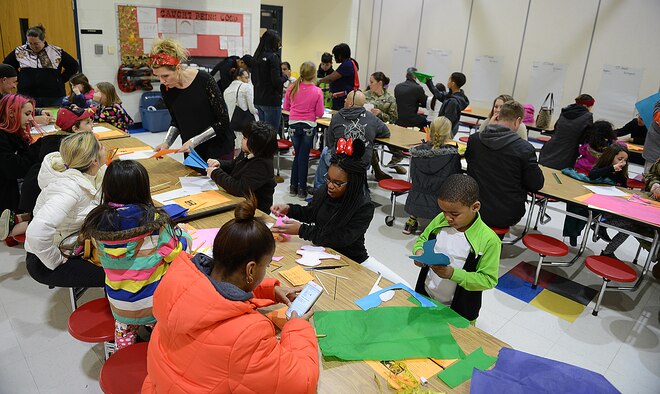
Image result for math classroom
An inquiry model does not require a student to "construct" their understanding of a concept and then leave it at that. The basic lesson has three parts: a minds-on section in which a problem that builds upon prior knowledge is introduced and students are asked to think about how they would go about solving it; an action section in which students collaborate and share their ideas, applying them to a new problem or problem set that extends the concept, with the same concept; and then a consolidation phase in which students share their work. Various approaches used by the students and introduced by the teacher as needed are compared and evaluated for clarity, consistency and efficiency. This phase is where the students consolidate their learning. Students are often asked to complete a new problem or problems using the concept as an "exit ticket" to show their understanding. The teacher uses these to determine the next steps needed for the class, as well as individual students, in order to further their learning.

In subsequent lessons, students are also asked to apply their mathematical understanding in various hands-on ways, which might include projects built in maker spaces, coding, or geometric art.

Taking a lesson to look at mistakes every now and then is also common. Students are asked to look at a teacher-chosen problem and solution, and demonstrate why the reasoning used is not correct. The ideas are that in learning from mistakes, students realize that making mistakes along the way is part of the process, and it also encourages them to work on their own mathematical reasoning skills and means of communicating their mathematical thinking.

What is missing from this approach? Memorization of an algorithm and repeated practice. Memorization of an algorithm provided by the teacher, with detailed steps on how to complete the algorithm, is what many adults equate to math instruction. It is what is familiar to them, since many learned it this way. However, simply knowing the times tables and how to do long division alone do not make a person numerate, any more than knowing the alphabet and phonetic sounds makes someone literate. Maybe you can sound out a simple word, but to gain meaning from the text requires comprehension skills. This is also true of math.


It is true that memorization of times tables helps with the quick completion of worksheets in higher grades. Computation abilities are still important. Even though we have tools everywhere that can complete this with greater speed and efficiency than people can, being able to process these smaller steps with ease and fluency frees up working memory needed to manipulate more complex problems. However, we do have computational tools (calculators, electronic devices, computers), so placing our priorities on those computational skills alone is not beneficial and does a disservice to our students. We need students who are able to apply those concepts, program the computers, choose a strategy, solve problems, make connections, find patterns and apply and extend those patterns, plan and strategize. We need to prioritize higher-order thinking skills that allow us to move beyond basic computation. Students need to develop a sense of number, quantity, additive and multiplicative reasoning, proportional reasoning, patterning, balance, spatial reasoning, estimation skills and so on.

To remain stuck at memorization of number facts and algorithms alone is simply not enough.

Practice is one area that in my opinion could use more balance. We have gone from reams of worksheets, usually all of a single problem type that does not require reflective thought, to the use of 1-3 problems in a day to illustrate a concept. Somewhere in the middle is a place where students have a chance to work on problems that reinforce a concept while being required think critically and strategize, not only with the algorithm of the day, or by matching a pre-determined vocabulary list with a given operation, but in visualizing and manipulating the information given until they make sense of it, then applying an appropriate strategy and computation for solving it. Students need to also be encouraged to search for and find the answers to the age old question, "(when) will we ever use this?". If they don't see a purpose in it, how can we expect them to find the motivation to struggle through a problem or concept? The purpose must be clear.

Another recent push in education is the concept of developing a Growth Mindset, as described by the work of Carol Dweck, and elaborated upon by Jo Boaler. The ideas here are that students need to be open to learning, and accept that there will be some struggle when they are truly learning, but that they are capable of working through this struggle to gain competency. This is especially important in math, since there are many myths that abound about people having a "math brain" or not having one, which is simply not how brains work. While we'd never shrug off being illiterate, common phrases and ideas such as "I'm not a math person" and "you must be so smart to understand math" show how our society reflects an idea that numeracy is out of reach for many people. If students are to learn math, they need to first believe that they can learn it, and the adults around them need to also believe they can.

Wednesday, 23 March 2016

Pieces of the Whole

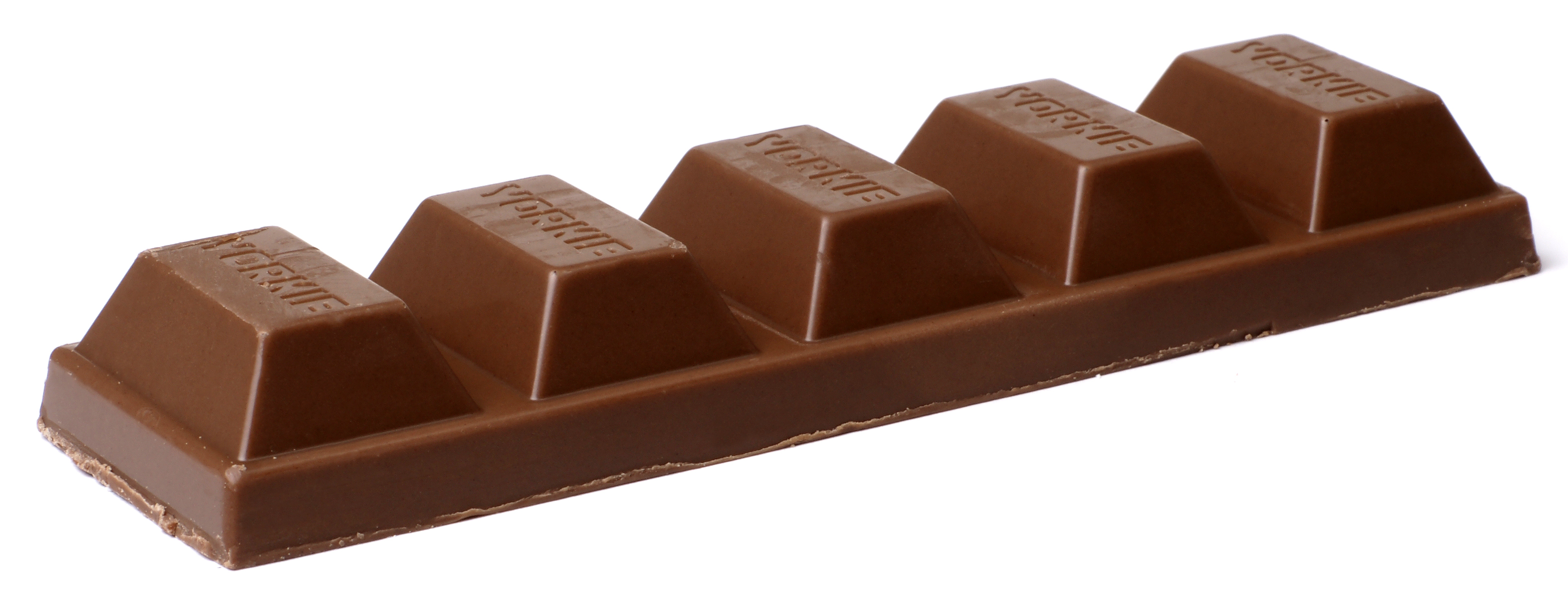
In working through activities for basic numeracy skills, the "pieces of the whole" idea keeps surfacing, regardless of what manipulatives or operations are being used. It started when I was looking through sock matching and sorting activities, in which two matched socks make a pair, with the "pair" representing a whole. It continued through Lego brick building, pattern block mosaics, and looking at everyday grid patterns such as are found in trays of cans, chocolate bars, golf balls, etc.

Whether you are working with addition and subtraction, multiplication and division, fractions or percentages, the concept of "part" forms a vital part of the math lesson.

Some examples:


In this chocolate bar, the whole is "5", so one piece is 1/5 of the whole. Fractions work when the size of the parts is the same for each piece. 
We can also share a single piece with 4 friends and have one left over to keep. 5 ÷ 1 = 5
We can break off two pieces to make the subtraction sentence: 5 - 2 = 3
and then add them together again to make the whole bar: 3 + 2 = 5


In this lasagne, there are 5 columns, of which one is missing. Therefore, 5 - 1 = 4, or, there are 4/5 of a lasagne left. We can also say that 20% of the lasagne has been eaten.


In this carton of eggs, there are 12 eggs. Two of the eggs are white, one is blue, and the rest are brown. 2/12 or 1/6 of the eggs are white. 1/12 is blue. 9/12 or 3/4 are brown.
2 + 1 + 9 = 12
We can also say there are 6 pairs of eggs, or 6 x 2 eggs in the carton.
If we only want to use the brown eggs, we can remove the others: 12 - 3 = 9
We can divide the carton by rows, columns, pairs of columns, or into two equal columns 3 eggs wide. In doing so, we can investigate factors of 12, and experiment with various potential common denominators when exploring related fractions, and explore equivalent fractions.

Parts of the whole form a basis from which we can build on many mathematical concepts. We can extend this for use when speaking of angles, while referring to the circle (360 degrees) as the "whole" from which other angles are compared. This is, in fact, exactly how pie charts work.


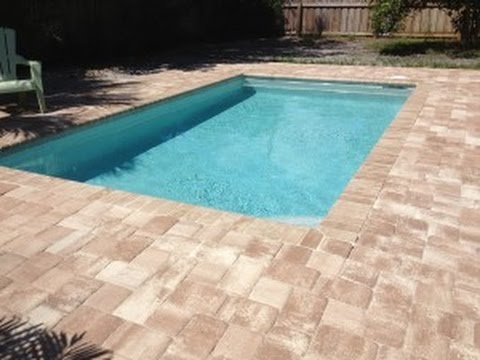
We can even take this into polynomials by calculating the area of a deck for a pool:
If the pool is 8 m x 15 m, what is the area of a deck that surrounds it if the width of the deck has a universal width of 4 m?
The pool and the deck together become the "whole" combining the area of the pool and the area of the surrounding deck. 

This concept, of parts making a whole, is also a vital part of integral calculus in which the area under an irregular curve is calculated.


Encouraging students to explore these concepts using mathematical terminology and sharing their discoveries can help in relating previous knowledge with new concepts.


Saturday, 16 January 2016

Multiplication Woes

Multiplication and multiplicative reasoning can make a world of difference in a student's mathematical development, however, for many it becomes a stumbling block that slows them down, sometimes to the point of hindering their studies in high school and limiting their post-secondary options.

There are many different ways to understand multiplicative expansion (the word "growth" can become confusing when students begin to multiply fractions and integers). One way is to see it as a series of addition problems, such as:
2
2+2
2+2+2
2+2+2+2
2+2+2+2+2
and so on. As we move down each row, the multiplier increases by 1 so that:
1x2 is 2
2x2 is 2+2
3x2 is 2+2+2
4x2 is 2+2+2+2
5x2 is 2+2+2+2+2
 You can also say it as "3 two's make 6" or, "3 groups of 2 equals 6".

Another way to represent this is to use grouping. Students can make piles of manipulatives such that each pile has the same number of items in it. This time, let's use multiples of 7. In this case, each pile would have 7 pieces. Let's say they wanted to know how many 4 groups of 7 are, or, 4 x 7. Students can use various strategies to determine the total.
They can:

  • count up the total number of pieces by either counting each individual item in all of the piles
  • start counting-on using their understanding that the first pile has 7, then continuing counting the remaining piles from 8 onward
  • count each group "by 7's", also known in some circles as "skip counting"
  • count the number of groups and use their remembered answer for 4x7
Each of these stages show a different level of mastery of the concept.

However, piles of manipulatives, or circled pictures of groups of objects on a worksheet have a limited usefulness when it comes to visualizing the patterns that are common to multiplication.


For this reason, we can try and move to an area model as shown below. It is called the area model, because the solution to the multiplication problem also represents the value of the area of the rectangle. Area is another way in which multiplication can be visualized, and it also shows a practical application of the concept.

In our example the number of units in each row is 7, while the number in each column is 6. We have 6 rows of 7, or 6 x 7 units in the rectangle.
We can look at this model in two ways. We can look at the columns (7 columns of 6 units each, as shown on the left), or we can look at rows (6 rows of 7 units each, as shown on the right). We have simply lined up the groups into columns or rows to make counting, as well as visual representation, easier.

The grid lines in these pictures don't have to be there for the model to work. Simply knowing the base and the height of the rectangle gives enough information so that the multiplication problem can be solved, and the area found.

Adding the grid lines helps us see the groupings involved, and makes the visual representation of the problem clearer, particularly for students who have not yet reached mastery. Approaching the same problem using groups of rows and repeating it using groups of columns helps reinforce the key principle of commutativity, in which the order of the numbers multiplied does not change the final product.

The grid model can be used with manipulatives that allow for columns of units to be connected, such as unifix cubes, multi links, Lego, or square tiles. These columns can be put together to form the rectangle that represents the problem.

Once the multiplication concept has been explored, students will eventually need to learn to access those facts quickly. There are a number of options that can help with this including:
  • learning to skip-count (counting by a number, such as 3-6-9-12-15-18-21-24-27-30-33-36-39-42-45 etc.
  • classroom games
  • finding number patterns to follow (even numbers for 2's, ends in 0 for 10's, digits add to 9 for 9's etc.)
  • recognizing patterns in daily life (eggs come in 2x6=12; a case of canned vegetables has 4x5=20 cans, etc.)
  • intensive answering, such as with regular timed tests, Mad Minutes, etc.
  • rote repetition
  • written tables such as the one to the right, which are given blank for students to complete and mark for patterns
  • musical chants /songs
  • classroom charts
  • calculators 
Each of these has its place at various times, however, students who can spend less effort to retrieve these facts do better as more concepts are introduced in higher grades.

The over-use of rote methods, and the dawn of Bloom's Taxonomy, have made the task of having students memorize their times-tables unpopular in the classroom. This is slowly changing.

The problem is not so much that students spend time memorizing these facts, which is admittedly a lower-level task, but that if they do so without an understanding of how multiplication actually works, the knowledge of "facts" will have limited value as more complex mathematics are introduced.  Students who understand the language, the commutative property, the groupings, and that multiplication is an advanced form of addition, can show how multiplication patterns continue, and likewise, how using the inverse operation of division causes the pattern to reverse, will be well equipped to apply it to fractions, decimals, integers, algebra, etc. They will also be better able to handle related concepts such as area and volume.


Tuesday, 17 September 2013

The Latest False Dichotomy in Education

Years ago when I was a student teacher, there was a battle of sorts being waged in the language arts curriculum: the phonics vs. whole-word approaches to teaching reading. On one hand, students were asked to sound-out all words they did not know, and on the other, students were asked to memorize thousands of words. Reality: fluent readers use a variety of techniques including but not limited to the ones espoused by such methods. When some people tried to call this approach "whole language" it created confusion as many missed the difference between "whole word" where individual words are memorized out of context with 'whole language" in which context, along with phonics and sight words is an important component.

Many moons later, we see a similar battle being waged in the teaching of mathematics. 

There are the traditionalists who value "sage on the stage" and "drill and kill" methods in which students memorize algorithms and focus on answer-driven tests. Students become walking calculators, and weaker students are often left without the conceptual understanding to allow them to know when and how to apply these algorithms to solve everyday problems. Mnemonics such as "Yours is not to reason why, just invert and multiply", "FOIL" (which only works for up to two terms), and what I've only recently discovered, the "butterfly method" for multiplying fractions are examples of how conceptual understanding is replaced with memory tricks in order to gain a correct answer on a standardized test.

Then there are the constructivists who believe that students must create their own knowledge set through experimentation. They offer an overwhelming range of options for students to explore, but often neglect the final stages of consolidation and review, as well as time for practice with additional problems. Critics argue that since it took centuries to develop the fields of mathematics, expecting students to "reinvent the wheel" is a waste of time for everyone. Such teaching can also be time-consuming, and students who are struggling can become overwhelmed and confused with the large variety of methods to solve a given problem.

Again, just as in the reading example, the polar extremes reflect a false dichotomy when it comes to learning.

Since there seems to be a reluctance for educators, policy makers and the general public to consult the literature, examine what we know about cognitive development and read the studies, there becomes a tendency to grasp onto the methods one is familiar with and hold these as sacred. In many cases in North America, this means that the traditionalist methods are held in higher regard than the constructivist methods. Looking to other countries that tend to do well in mathematics, there are some interesting cultural differences that appear in the approach to teaching and evaluation. One example can be seen in this video with Phil Daro http://vimeo.com/30924981.

In the middle, is student inquiry (again, the name is often used as a substitute for pure constructivism, which causes confusion) in which students are encouraged to try out problems using whatever means they can, discuss the various methods that worked and didn't, share and yes, memorize the methods that work consistently, and connect these methods and patterns to problems they encounter in everyday life. There is structure to the lesson, but there is also a place for students to work with problems on their own terms, experiment and make connections with prior learning. Lessons are scaffolded so that they build on concepts already mastered. Consolidation happens with the whole class and is reviewed again at the start of the next lesson. Students still memorize times tables and formulas, but they also understand where these come from and what is happening with them. They can use a matrix to show multiplication and can tell you why ax + by + c= 0 is a different way of showing y=mx +b, and how various different values of "m" will change the slope of a line when graphed. They can relate this to situations in their everyday life. They know what to do when confronted with 
(2x + y)(3x +2y -z)
 because they have learned the underlying pattern of how this works, rather than just a convenient but limited mnemonic. The understand that BEDMAS is an mnemonic shortcut that helps them use the distributive property, and that the multiplication/division are interchangeable as are addition/subtraction.
Without context, understanding of the underlying pattern, and sufficient understanding to apply the concept widely, a math student's abilities are no more useful than a calculator, and are likely much slower at that. We need people who can not only calculate, but choose the appropriate algorithm and problem-solve in a variety of situations. We need people who understand how to program the algorithms in the first place. Math is not a religion to be taken on faith; it is a science that stands up to scrutiny. We would do well to remember this as we approach the subject in the classroom.

Students learn by doing and thinking, by struggling through problems. When this is connected to their everyday experiences, it becomes meaningful. If we can recognize this in other subject areas, then why not in math?


Wednesday, 14 August 2013

Working Backwards

Looking through many resources in preparation for teaching math in the school system, there seems to be a very common pattern that is rarely broken: introduce algorithm, apply it to increasingly difficult pre-determined problems, review, then tack on a "real life" or "word" problem to add application as almost an afterthought. Some resources even skip this last step, and few indeed involve proofs, aside from a couple that show how to derive the quadratic equation.

In mathematics, we have a tendency to ask students to accept algorithms without question or debate. We essentially eliminate critical thinking from our teaching.


This is not the way teachers are trained in my province, yet many resources that are used in our classrooms still follow this sequence, and many teachers drift toward this in their practice. The emphasis remains on the lower levels of Bloom's Taxonomy at the expense of activities that promote higher-order thinking. In my review of the literature, it appears that teachers are most likely to work in this direction for two reasons: this is the way they were taught, and their comfort level with the curriculum is low.

When I say their comfort level is low, I do not mean that they do not necessarily hold a deep conceptual understanding of the topic, but that for various reasons (most often relating to allotted classroom time), they feel the need to get the basics covered as quickly as possible, and for many, teaching algorithms is how they view "the basics" when it comes to math.

But what if we were to reverse this direction, and start with the applied problem?

Critics say that this leaves students high and dry, with the need to reinvent conceptual knowledge that took mathematical superstars many years to develop. They say it leads to confusion when the approach they might try is not the most efficient method.

However, no one is saying that we withhold the algorithms from the students, only that we let them think about the problems that lead to them in order to foster a sense of pattern and deeper conceptual understanding of the processes involved in applying mathematical thinking.

All the memorized algorithms in the world are useless if students never learn when or how to use them outside of math class or standardized testing.

Sure, it takes a little more time for students to think through the "why" of a problem, but feeding them algorithms to memorize and apply does students a disservice. Computers can work through algorithms, and they do it faster and more accurately than people. What we need are people who can reason mathematically, and this requires that we provide a space for applied problem solving and reflection.

It is my gut feeling based on what I've seen with the students I've worked with that students who develop applied problem solving skills aka mathematical reasoning skills, begin to make deeper connections quicker with later topics. In this way, the time invested at the outset may offset the time needed to cover later related topics.

For teachers to abandon the chalk-and-talk and promote these skills will take a leap of faith. It is much more comfortable to stay with the known, particularly when there is a perceived crunch in terms of curricular content demands and the allotted classroom time to cover it. Students may resist since they are used to being given the entire topic at the outset. People tend to resist change.

How many times have we heard the question from our students, "When will we ever use this?". Students, particularly those for whom math does not come easily, need to understand this in order to invest their time and effort accordingly. Resources like this one: 101 uses for a quadratic equation and this one: "Why study math?" can be good places to start. Starting with a relevant real-life problem is also an effective way to connect theory with application.

I issue the following challenge to all teachers who read this blog: choose one topic this year to present this way and see how it goes. Start with a real-life problem, challenge students either individually or in groups to devise a way to tackle it, and share results using Bansho or another similar method in which the different approaches can be grouped in a meaningful way. Discuss which ones work and which don't and why. Finish with a review of those ways that work best. Follow up with some practice problems.

Did you or your students resist? What challenges did you face? Did different students participate than usual for your class? How might you use this to best encourage mathematical reasoning in your students?


Saturday, 11 May 2013

The Value of N

I've been thinking a lot lately about the way math is visually presented to young students. Looking at equations and the meaning of equal signs, as written about in this recent post, I also began to wonder about the use of answer blanks, such as can be found in questions like this one:

5-3=___

There are reasons to write it like this, most obviously to give the student a place to put the "answer" or, better put, to complete the equation. However, following the equal sign with a blank might also be the cause of some confusion when students reach introductory algebra. They may have learned to associate the = sign, and/or the blank with "this is where the answer goes" rather than understand that this is an equation in which the value of each side must balance.

Consider the following way of representing the same question:
5-3= n
which could be followed with:
n = ___

or simply the words, "What does n equal?" or perhaps better still, "What is the value of n?".
(I chose the letter "n" because it can stand for the word "number", but any letter would work as well)

While there is still that problem of the equal sign followed by the blank, the way the first part is represented manages to help convey some information that is missing in the first example, such as "what are we looking for?" and "how can we represent the unknown number that will balance the equation?".

Maybe a picture would help get the idea across better (please forgive my crude drawings!):


Of course, if you have a balance and unit weights handy, you could always use those to help solve the problem.

I wonder if presenting simple arithmetic with a variable rather than a blank from the outset would help students better understand the concept of equation and equality better, and also predispose them to accept variable notation when it becomes more crucial in algebra.

If you choose to use this idea with your students, I'd be very grateful if you would let me know how it goes.

Friday, 3 May 2013

On the Concept of Balancing Equations


So often in the early grades kids become accustomed to seeing problems written out as below:
3 + 4 = ________

When the answer blank appears in different places in the equation, such as on the left-hand side, it can help, as can the creative use of manipulatives to represent the symmetry of equations. However, the connection between the equal sign and the demand for an answer may continue to confuse some students. Some students learn to think of the = sign as meaning "insert answer here" rather than as the fulcrum of the equation.

What do I mean by this?

Consider the term "balancing an equation".
If you envision an equation as a balance scale, you can put the = sign at the centre, or fulcrum of the scale. In this way, the equation is balanced when both sides are equal to each other. There is a symmetry in the weight on each side.

This can be used to demonstrate the mathematical meaning of the equal sign in a hands-on concrete way.

For students who have difficulty with the concept, consider having them use the balance with weight manipulatives. x might be the name of the 1 gram weights, y the two gram weights etc. Let them play around.

What if they put 2x on one side and y on the other? When the balance is level, the sides are equal.
What if you put 2y on one side and x on the other? When they balance is tilted one way or the other, the sides are unequal. Instead of an equation, you have an inequality ≠.

You can take this a step further if your scale is the kind that has an arrow on the fulcrum. Label the point of balance with an equal sign =, and the space on either side with an inequality sign ≠.


Encourage students to write the equations as they work with the balance to solve problems and also to make predictions of what expressions will be equations and which will be inequalities, as well as determine what is needed to turn an inequality into a balanced equation.

More of my math activities can be found here.

Wednesday, 3 April 2013

Why I Love Khan

Khan Academy is one of the best known free educational sites on the internet. Here you can view hundreds of short videos on a wide range of topics, work on sample problems and chart your own progress all for free.

I know that the lecture format isn't the most ideal way to learn, but there are some excellent reasons why this format is popular. Here are the reasons I love Khan:

1. The videos are short, well sorted and well explained. This allows anyone to quickly look up a topic and clarify points easily.

2. Khan has a friendly, relaxed manner that puts you at ease. He doesn't re-film his errors, just corrects himself as he goes, showing students that it's OK to make mistakes and that you just need to double-check and keep going.

3. You can access these anywhere, replay them as often as you want and can learn at your own pace in privacy. Chances are good that if you still don't understand a topic, someone will have posted the question you have in the comments. The community here is strong, and the questions tend to be answered thoroughly. The explanations are clear and broken down into logical steps. He makes no assumptions about the connections the viewer will make automatically--everything is explained. When you understand a part, it is very easy to skip ahead as needed.

4. It is available free of cost to anyone who has an online connection. The videos do not require high speed connections to run.

5. Sal Khan is an excellent role model. He took a huge risk in order to develop this site, and has put much of his own time and money into it without resorting to charging fees or hosting ads to pay for it. As an owner of a website, I can tell you it is not easy to avoid the need to allow advertising since site hosting does not come free. When you consider the hundreds of hours spent making and organizing the videos and website, the immense size of this task is truly overwhelming.

6. You can progress from basic operations right through to graduate level math through this site. Although it is always best to use a variety of resources for your studies, the list of topics covered within the math section at least is quite extensive and thorough.

7. You can access all parts of the site without having to provide any personal information. The only thing you miss out on if you don't provide info is a record of your progress through the videos and lessons.

8. The colour coding helps keep things visually organized.

9. Unlike textbooks, it provides both visual and auditory explanations.

10. The short length of the videos makes them more manageable and allows for natural breaks between sections and concepts.

11. They are accessible to people who struggle with the concepts. They are non-threatening and can be watched and completed in privacy, which makes them more attractive to students who need a little more or a little less time to master a concept and would prefer to move at their own pace without being put on the spot to answer questions in public.

12. Vi Hart has partnered with Sal Khan for some videos and if you are familiar with her work, you will immediately understand that this is a very good thing!

There are other free educational courses available online, including many open courseware options, but the short video format fills a need not found in many other places. Both are excellent opportunities to extend your learning of specific topics without having to travel or commit large amounts of time or money.

Thank you Sal, and all the others who provide us with valuable and accessible educational resources.

Monday, 9 January 2012

Math and Art

When I used to hear the pink-tied "mathies" at the University of Waterloo speak about the "symmetry of numbers" and the "beauty of an equation" I will admit that I really thought they'd been spending too much time crunching numbers and had completely lost touch with reality. Then a friend studying math introduced me to the art of M. C. Escher, and I was (almost) convinced that there might be something to this after all. Until this point, the closest I'd ever come to connecting math and art was with an annoying grade 8 project. Perhaps you remember using string to connect nails on a board in order to turn straight lines into curves? Well, we had to provide all the materials and tools, and the kids who cheated and bought the pre-patterned and pre-nailed hobby shop kits got the highest marks. This was not a good way to make a positive math/art connection!

If you aren't familiar with the work of Escher, here is a link to the "official M. C. Escher website". Escher was famous for his impossible art--featuring stairways that changed orientation depending on your point of reference, and transformations (tessellations) in which a repeating fish pattern might gradually coalesce into a flock of birds in flight, or a group of lizards might suddenly walk off a drawing page moving from two- to three-dimensional creatures. His tessellation work ranges from the simple to the quite complex in its geometry, and the staircases, which feature impossible spaces, seem to draw from non-existent dimensions. He also used reflection tricks, though he is less famous for these.
I could not find any public domain Escher works, so you will need to visit the link above to take a peek at his work.

Mathematics is an integral part of art, whether in the case of two-dimensional art, as in drawings, sketches, paintings, etc. or three-dimensional sculpture. Artists use perspective, vanishing points, horizon, the "rule of three", the "golden proportion" and many other mathematical tools. Geometry is an integral part of form in art. Sculptors also incorporate the use of 3-dimensional space and topology in their work. Topology is the mathematical study of the properties that are preserved through deformations, twistings, and stretchings of objects (Wolfram Alpha site definition).Some examples of topology can be found here. An example of a sculpture based on the idea of a 3-dimensional spirograph can be found here.

Natural patterns, such as the patterns on cones, leaves, flower petal arrangements, formations of shells, etc. tend to follow the Fibonacci sequence. This is a sequence that starts with 0 and 1. Add those together to get the third number, which is 1. Add the last two to get the next number, which is 2. Add the last two to get 3, then 5, 8, 13, 21, 34 etc. These number can be found in many places! And their patterns make for some interesting art as well.

If you have ever heard of fractals or Mandelbrot Sets, you are familiar with Chaos theory. The book Chaos by James Gleik explains better than I can how this branch of mathematics takes seemingly random or chaotic data or systems and attempts to find the underlying pattern governing the data/system. The resulting mathematics has provided interesting equations that create beautiful patterns. Some of these can be found in nature, such as in the pattern of a shoreline, a feather or a fern leaf.
Here is an image of a Mandelbrot Set and a second image of it repeated:
Source: Wiki Commons (both images)
For more on Mandelbrot sets, see this incredible site: http://www.skytopia.com/project/fractal/mandelbulb.html
Here are two contrasting images of fractals:
 Source: PDphoto.org
Source: Wiki Commons

These may be mathematical constructs, but one would be mistaken not to also consider them beautiful, and in their own way, works of art.

So when you or your students get bored of ho-hum arithmetic and worksheets, have a little fun with some of these and see where they take you!

More math activities and links can be found here.

Thursday, 1 December 2011

Celebrating a STEM Holiday Season

STEM is an acronym that stands for Science, technology, engineering & mathematics.

Adding a little STEM to the holiday season is a great way to have a little geeky fun.

Math

Mobius Paper Chains:
Liven up the traditional paper chains by giving each link a twist before fastening. Try making a thicker link on its own, then cut it down the centre to see what happens. You can use a few of these for your chain as well.  Try cutting a strip 1/3 from the edge all around. What happens?

Stars & Angles:
What kind of star do you get when you join up all the corners of a square? Pentagon? Hexagon? Septagon? Octagon? Calculate the angles involved in each of these. What is the sum of the angles for each of the different stars?
Now try drawing a triangle on a sphere (a balloon or Christmas ball will work well). Measure the angles of this triangle. What do you notice about their sum? What might this mean if you were to draw one of the stars on a sphere? Try it and see if your predictions hold.

For the younger set:
The Twelve Days of Christmas song lends itself well to learning ordinals (1st, 2nd, 3rd, etc.), and at the end you can add up all the gifts the "true love" gave. Can you find a shortcut for adding successive numbers?

An Advent Calendar as well as a regular calendar can reinforce counting up and counting down skills.

Science
A few chemistry concoctions lend themselves well to Christmas.

Crystal window paint: This easy-clean recipe uses epsom salts to make a crystal pattern on any glass surface.
Crystals:
  Use this salt solution recipe to paint crystal patterns for cards and gift tags.
  Make a classic borax crystal ornament (remember when you did this as a kid?)
Snow:
  Use one of these recipes to make either shaving-cream or soap-based indoor "snow" dough.
  Paint the snow with spray bottles.
Don't forget to take a little time out for a nature walk and some star gazing too!

Engineering
Design your own Rube Goldberg machine to deliver a gift to a loved one, or make it a little simpler and set up your electric or wooden train around the tree to do the same thing.
Make and use some squishy circuits (playdough recipes that conduct and resist currents) to make a light-up Christmas tree, Rudolph, etc.

Technology
Design an electronic gift card, video greeting or holiday game using one or more of the following:
Scratch drag-and-drop computer programming tool from MIT
Windows paint
Picasa (try making a mosaic creation too!)
Photoshop
MS Movie Maker
Muvee
Or any other photo, drawing, graphics, video or word processing programs you like.
Or try Make-a Flake for some addictive mess-free snowflake making.

Remember, many more math & science activities can be found on the Lemonade website.

Thursday, 13 October 2011

Math Enrichment Resources

After several months off, I am finally returning. As long as Blogger and I can peacefully co-exist, I promise to resume regular posts.

Since I have been asked several times over the past two weeks for sources of math enrichment, today I post about math enrichment resources.

I will start with a shameless plug for my own math page, which can be found here. On this page you can find resources for young children, including everyday math around the home, baking with children, instructions for some math manipulatives you can make yourself from items you probably have already, and some strategy games you can also make yourself. There are also links to more advanced resources, including topics such as topology, tesselations, magic squares, Fibonacci & other sequences, computer programing, geometry, quantum math, math contests, and much more.

Another valuable resource for students working at grade 4 level and up is the CEMC (Centre for Education in Mathematics and Computing) site. This is run from the University of Waterloo, and these are the people who bring you the Gauss, Pascal, Cayley, Fermat, Fryer, Galois, Hypatia, and Euclid Contests.
Past contests, along with solutions can be found here.
Online math games and resources from the CEMC can be found here.

Khan Academy offers free online instructional videos on a wide range of mathematical topics, along with online problems. These allow anyone to follow a self-guided course of instruction. If you log in to a free account, you can track your progress and view suggested subsequent topics to explore. Each video is 3-5 minutes in length. Topics range from basic operations to post-graduate topics and are ideal for all ages and levels.

For kids who want to learn to create their own video games, or just learn to program in general, Scratch from MIT is a child-friendly drag-and-drop program that introduces basic commands and can become highly addictive for kids and adults alike.

If you are like me and would like to limit the amount of time you and your children spend staring at screens, the following books might be of interest:

Big Ideas for Small Mathematicians &
Big Ideas for Growing Mathematicians Ann Kajander
Math for Smarty Pants Marilyn Burns
Math Games for Middle School Mario George Salvadori
Mathematics Made Simple, 6th Ed. Thomas Cusick
Chaos James Gleick


Unfortunately, my list lacks strong book-based math for the high-school level and beyond. Do you know of any good math enrichment offered in book form for these levels? Please add them to the comments.

Additional educational resources, sorted by subject: http://greensim.com/lemonade/Educational.html

Tuesday, 23 March 2010

Science, because I want to

My elementary school did not have a science lab or even  a science teacher, so when I reached high school, I was unfamiliar with the workings of bunsen burners and didn't know the difference between a beaker, a test tube and a flask. In grade 9, I was in a class with kids who had to repeat it, so they always gathered the equipment and set it up while I read the experiment and wrote it up.
crystal growing jars
tinted borax crystal ornamentIn grade 10, when I asked my physical science teacher what I needed, he accused me of being difficult, and from that point on, refused to answer any questions I or my lab partner had. We were the "giggling girls" (which only got worse over time), and he was never interested in seeing us as curious, intelligent students. The curriculum didn't help. Levers and pulleys could have been much more interesting--just ask my kids! Why were we only beginning to study that in grade 10? He gave us more academic credit for washing the glassware (doing the dishes) than for actually doing any science.


slime silly putty polymerBut I was always very curious, and would not let the stereotyped opinions of this so-called teacher ruin that. Ever since then I have made a point of learning what I could, on my own, about physics, albeit from a layperson's perspective. For me it is pure entertainment. I gain pleasure in learning what I can and passing it on enthusiastically to others. It is in this spirit that I have introduced my kids to kitchen chemistry, Rube Goldberg machines, model rocketry, and amateur astronomy. My kids have enjoyed exploring fractal patterns, discussing mind experiments about black holes and dark matter over dinner, and wondering about the nature of potential extra dimensions as postulated by string theory. And why shouldn't they? These are the topics that tickle the imagination and make you come back again asking for more.


egg after shell dissolved in vinegarThese are the interesting things--the "what ifs", the wonders of things yet to be discovered as well as the exclamations of delight upon mixing glue and borax to get a strange polymer, the fascination of making cabbage water turn every colour in the rainbow, and figuring out what makes that happen. If the kids can know that awe and wonder about the world, and maintain it throughout their lives, I believe I will have attained something Mr. Penton never could. Maybe, in that sense, Mr. Penton did my family a favour.

In this spirit, I have shared some of our science experiments and resources we have enjoyed on Lemonade: http://www.greensim.com/lemonade/science.html