Showing posts with label manipulatives. Show all posts

Wednesday, 23 March 2016

Pieces of the Whole

In working through activities for basic numeracy skills, the "pieces of the whole" idea keeps surfacing, regardless of what manipulatives or operations are being used. It started when I was looking through sock matching and sorting activities, in which two matched socks make a pair, with the "pair" representing a whole. It continued through Lego brick building, pattern block mosaics, and looking at everyday grid patterns such as are found in trays of cans, chocolate bars, golf balls, etc.

Whether you are working with addition and subtraction, multiplication and division, fractions or percentages, the concept of "part" forms a vital part of the math lesson.

Some examples:
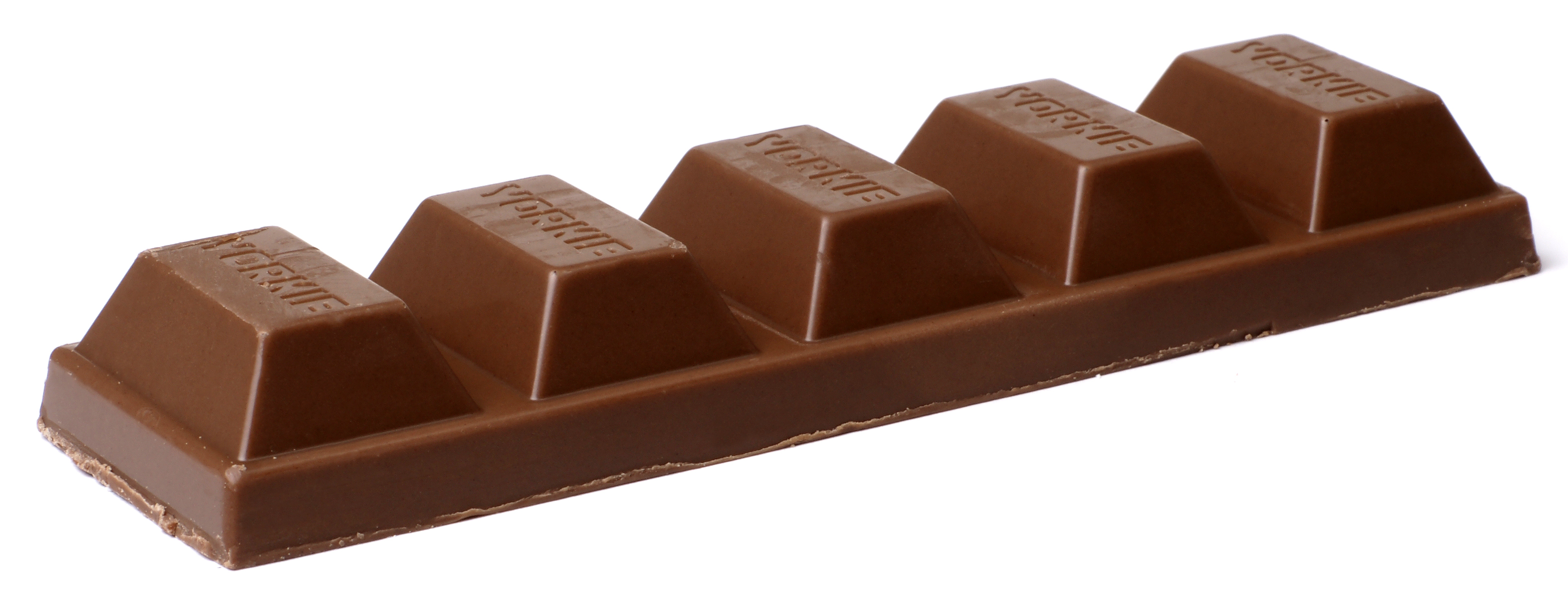

In this chocolate bar, the whole is "5", so one piece is 1/5 of the whole. Fractions work when the size of the parts is the same for each piece. 
We can also share a single piece with 4 friends and have one left over to keep. 5 ÷ 1 = 5
We can break off two pieces to make the subtraction sentence: 5 - 2 = 3
and then add them together again to make the whole bar: 3 + 2 = 5


In this lasagne, there are 5 columns, of which one is missing. Therefore, 5 - 1 = 4, or, there are 4/5 of a lasagne left. We can also say that 20% of the lasagne has been eaten.


In this carton of eggs, there are 12 eggs. Two of the eggs are white, one is blue, and the rest are brown. 2/12 or 1/6 of the eggs are white. 1/12 is blue. 9/12 or 3/4 are brown.
2 + 1 + 9 = 12
We can also say there are 6 pairs of eggs, or 6 x 2 eggs in the carton.
If we only want to use the brown eggs, we can remove the others: 12 - 3 = 9
We can divide the carton by rows, columns, pairs of columns, or into two equal columns 3 eggs wide. In doing so, we can investigate factors of 12, and experiment with various potential common denominators when exploring related fractions, and explore equivalent fractions.

Parts of the whole form a basis from which we can build on many mathematical concepts. We can extend this for use when speaking of angles, while referring to the circle (360 degrees) as the "whole" from which other angles are compared. This is, in fact, exactly how pie charts work.


We can even take this into polynomials by calculating the area of a deck for a pool:
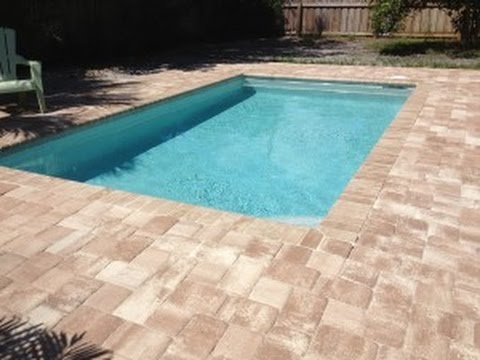
If the pool is 8 m x 15 m, what is the area of a deck that surrounds it if the width of the deck has a universal width of 4 m?
The pool and the deck together become the "whole" combining the area of the pool and the area of the surrounding deck. 

This concept, of parts making a whole, is also a vital part of integral calculus in which the area under an irregular curve is calculated.
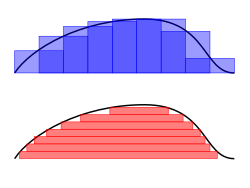

Encouraging students to explore these concepts using mathematical terminology and sharing their discoveries can help in relating previous knowledge with new concepts.


Friday, 3 May 2013

On the Concept of Balancing Equations


So often in the early grades kids become accustomed to seeing problems written out as below:
3 + 4 = ________

When the answer blank appears in different places in the equation, such as on the left-hand side, it can help, as can the creative use of manipulatives to represent the symmetry of equations. However, the connection between the equal sign and the demand for an answer may continue to confuse some students. Some students learn to think of the = sign as meaning "insert answer here" rather than as the fulcrum of the equation.

What do I mean by this?

Consider the term "balancing an equation".
If you envision an equation as a balance scale, you can put the = sign at the centre, or fulcrum of the scale. In this way, the equation is balanced when both sides are equal to each other. There is a symmetry in the weight on each side.

This can be used to demonstrate the mathematical meaning of the equal sign in a hands-on concrete way.

For students who have difficulty with the concept, consider having them use the balance with weight manipulatives. x might be the name of the 1 gram weights, y the two gram weights etc. Let them play around.

What if they put 2x on one side and y on the other? When the balance is level, the sides are equal.
What if you put 2y on one side and x on the other? When they balance is tilted one way or the other, the sides are unequal. Instead of an equation, you have an inequality ≠.

You can take this a step further if your scale is the kind that has an arrow on the fulcrum. Label the point of balance with an equal sign =, and the space on either side with an inequality sign ≠.


Encourage students to write the equations as they work with the balance to solve problems and also to make predictions of what expressions will be equations and which will be inequalities, as well as determine what is needed to turn an inequality into a balanced equation.

More of my math activities can be found here.