Showing posts with label mathematical reasoning. Show all posts

Monday, 11 September 2017

Here We Go Again...

Image result for math classroom canada

Every couple of years we see a huge public outcry about how we need to "go back to basics". Sometimes this is in response to test scores being "below average". Here I will (once again) weigh in on this.

Because most people have spent years in classrooms, they feel like they are qualified to weigh in on educational policy. They appeal to politicians who are not likely to have a background in education or psychology. However, the fact that Canadians are concerned about and value education is something that we can definitely be proud about.

Several news agencies have recently published articles calling for a "back to basics" approach to mathematical education. But what exactly are "the basics"? Are we speaking of numeracy, or simply a fluency with basic number facts?

Many opinion pieces cite methods such as Dewey's constructivism used in the current approaches. What is actually being taught in teacher education is inquiry learning, which shares some features with constructivism, but is not entirely the same thing.
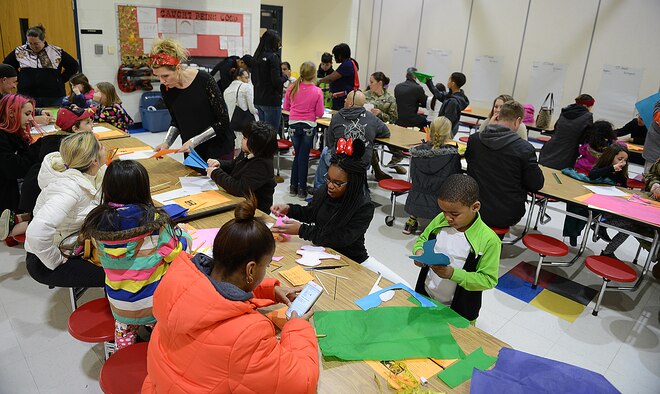
Image result for math classroom
An inquiry model does not require a student to "construct" their understanding of a concept and then leave it at that. The basic lesson has three parts: a minds-on section in which a problem that builds upon prior knowledge is introduced and students are asked to think about how they would go about solving it; an action section in which students collaborate and share their ideas, applying them to a new problem or problem set that extends the concept, with the same concept; and then a consolidation phase in which students share their work. Various approaches used by the students and introduced by the teacher as needed are compared and evaluated for clarity, consistency and efficiency. This phase is where the students consolidate their learning. Students are often asked to complete a new problem or problems using the concept as an "exit ticket" to show their understanding. The teacher uses these to determine the next steps needed for the class, as well as individual students, in order to further their learning.

In subsequent lessons, students are also asked to apply their mathematical understanding in various hands-on ways, which might include projects built in maker spaces, coding, or geometric art.

Taking a lesson to look at mistakes every now and then is also common. Students are asked to look at a teacher-chosen problem and solution, and demonstrate why the reasoning used is not correct. The ideas are that in learning from mistakes, students realize that making mistakes along the way is part of the process, and it also encourages them to work on their own mathematical reasoning skills and means of communicating their mathematical thinking.

What is missing from this approach? Memorization of an algorithm and repeated practice. Memorization of an algorithm provided by the teacher, with detailed steps on how to complete the algorithm, is what many adults equate to math instruction. It is what is familiar to them, since many learned it this way. However, simply knowing the times tables and how to do long division alone do not make a person numerate, any more than knowing the alphabet and phonetic sounds makes someone literate. Maybe you can sound out a simple word, but to gain meaning from the text requires comprehension skills. This is also true of math.


It is true that memorization of times tables helps with the quick completion of worksheets in higher grades. Computation abilities are still important. Even though we have tools everywhere that can complete this with greater speed and efficiency than people can, being able to process these smaller steps with ease and fluency frees up working memory needed to manipulate more complex problems. However, we do have computational tools (calculators, electronic devices, computers), so placing our priorities on those computational skills alone is not beneficial and does a disservice to our students. We need students who are able to apply those concepts, program the computers, choose a strategy, solve problems, make connections, find patterns and apply and extend those patterns, plan and strategize. We need to prioritize higher-order thinking skills that allow us to move beyond basic computation. Students need to develop a sense of number, quantity, additive and multiplicative reasoning, proportional reasoning, patterning, balance, spatial reasoning, estimation skills and so on.

To remain stuck at memorization of number facts and algorithms alone is simply not enough.

Practice is one area that in my opinion could use more balance. We have gone from reams of worksheets, usually all of a single problem type that does not require reflective thought, to the use of 1-3 problems in a day to illustrate a concept. Somewhere in the middle is a place where students have a chance to work on problems that reinforce a concept while being required think critically and strategize, not only with the algorithm of the day, or by matching a pre-determined vocabulary list with a given operation, but in visualizing and manipulating the information given until they make sense of it, then applying an appropriate strategy and computation for solving it. Students need to also be encouraged to search for and find the answers to the age old question, "(when) will we ever use this?". If they don't see a purpose in it, how can we expect them to find the motivation to struggle through a problem or concept? The purpose must be clear.

Another recent push in education is the concept of developing a Growth Mindset, as described by the work of Carol Dweck, and elaborated upon by Jo Boaler. The ideas here are that students need to be open to learning, and accept that there will be some struggle when they are truly learning, but that they are capable of working through this struggle to gain competency. This is especially important in math, since there are many myths that abound about people having a "math brain" or not having one, which is simply not how brains work. While we'd never shrug off being illiterate, common phrases and ideas such as "I'm not a math person" and "you must be so smart to understand math" show how our society reflects an idea that numeracy is out of reach for many people. If students are to learn math, they need to first believe that they can learn it, and the adults around them need to also believe they can.

Saturday, 16 January 2016

Multiplication Woes

Multiplication and multiplicative reasoning can make a world of difference in a student's mathematical development, however, for many it becomes a stumbling block that slows them down, sometimes to the point of hindering their studies in high school and limiting their post-secondary options.

There are many different ways to understand multiplicative expansion (the word "growth" can become confusing when students begin to multiply fractions and integers). One way is to see it as a series of addition problems, such as:
2
2+2
2+2+2
2+2+2+2
2+2+2+2+2
and so on. As we move down each row, the multiplier increases by 1 so that:
1x2 is 2
2x2 is 2+2
3x2 is 2+2+2
4x2 is 2+2+2+2
5x2 is 2+2+2+2+2
 You can also say it as "3 two's make 6" or, "3 groups of 2 equals 6".

Another way to represent this is to use grouping. Students can make piles of manipulatives such that each pile has the same number of items in it. This time, let's use multiples of 7. In this case, each pile would have 7 pieces. Let's say they wanted to know how many 4 groups of 7 are, or, 4 x 7. Students can use various strategies to determine the total.
They can:

  • count up the total number of pieces by either counting each individual item in all of the piles
  • start counting-on using their understanding that the first pile has 7, then continuing counting the remaining piles from 8 onward
  • count each group "by 7's", also known in some circles as "skip counting"
  • count the number of groups and use their remembered answer for 4x7
Each of these stages show a different level of mastery of the concept.

However, piles of manipulatives, or circled pictures of groups of objects on a worksheet have a limited usefulness when it comes to visualizing the patterns that are common to multiplication.


For this reason, we can try and move to an area model as shown below. It is called the area model, because the solution to the multiplication problem also represents the value of the area of the rectangle. Area is another way in which multiplication can be visualized, and it also shows a practical application of the concept.

In our example the number of units in each row is 7, while the number in each column is 6. We have 6 rows of 7, or 6 x 7 units in the rectangle.
We can look at this model in two ways. We can look at the columns (7 columns of 6 units each, as shown on the left), or we can look at rows (6 rows of 7 units each, as shown on the right). We have simply lined up the groups into columns or rows to make counting, as well as visual representation, easier.

The grid lines in these pictures don't have to be there for the model to work. Simply knowing the base and the height of the rectangle gives enough information so that the multiplication problem can be solved, and the area found.

Adding the grid lines helps us see the groupings involved, and makes the visual representation of the problem clearer, particularly for students who have not yet reached mastery. Approaching the same problem using groups of rows and repeating it using groups of columns helps reinforce the key principle of commutativity, in which the order of the numbers multiplied does not change the final product.

The grid model can be used with manipulatives that allow for columns of units to be connected, such as unifix cubes, multi links, Lego, or square tiles. These columns can be put together to form the rectangle that represents the problem.

Once the multiplication concept has been explored, students will eventually need to learn to access those facts quickly. There are a number of options that can help with this including:
  • learning to skip-count (counting by a number, such as 3-6-9-12-15-18-21-24-27-30-33-36-39-42-45 etc.
  • classroom games
  • finding number patterns to follow (even numbers for 2's, ends in 0 for 10's, digits add to 9 for 9's etc.)
  • recognizing patterns in daily life (eggs come in 2x6=12; a case of canned vegetables has 4x5=20 cans, etc.)
  • intensive answering, such as with regular timed tests, Mad Minutes, etc.
  • rote repetition
  • written tables such as the one to the right, which are given blank for students to complete and mark for patterns
  • musical chants /songs
  • classroom charts
  • calculators 
Each of these has its place at various times, however, students who can spend less effort to retrieve these facts do better as more concepts are introduced in higher grades.

The over-use of rote methods, and the dawn of Bloom's Taxonomy, have made the task of having students memorize their times-tables unpopular in the classroom. This is slowly changing.

The problem is not so much that students spend time memorizing these facts, which is admittedly a lower-level task, but that if they do so without an understanding of how multiplication actually works, the knowledge of "facts" will have limited value as more complex mathematics are introduced.  Students who understand the language, the commutative property, the groupings, and that multiplication is an advanced form of addition, can show how multiplication patterns continue, and likewise, how using the inverse operation of division causes the pattern to reverse, will be well equipped to apply it to fractions, decimals, integers, algebra, etc. They will also be better able to handle related concepts such as area and volume.