In a much earlier post, I talked about my relationship with science. If you happened to have read that, you will know that I am not a scientist. I am interested in science, but don't really speak the language or have any formal training, and as such, my musings are pretty much for my own entertainment. This usually comes at times when I am overtired and cannot sleep, so my thoughts are not usually very coherent!
I once read a piece--I think it may have been written by Robert Fulghum--in which the author explains that whenever he meets a new person, he asks them if they know the answer to the meaning of life (assuming 42 isn't it). He explains that while it may seem odd, he'd feel pretty silly if he met someone who knew the answer but he had missed the chance to find out because he neglected to ask. After all, the stupidest question is the one left unasked.
In this spirit, I am going to ask/speculate here about a few things I've wondered about regarding the physics of time.
Perhaps you will be able to clear these up for me and allow me to gain a good night's rest.
1. What happens to time as temperature falls towards zero degrees Kelvin? At zero, does time actually stop? This goes along with another question, which is, how can we accurately measure time? An atomic clock is the current best accuracy we have, but it would seem that the fall of temperature would distort the measurement when taken to this extreme. Any thoughts on this?
2. This one is from my 12 year old son from a conversation we had tonight at dinner (yeah, we talk about this sort of stuff over dinner!): what if the explosion of the big bang was not spherical, but rather cone-shaped or bi-conical (like lighthouse lights)? What might that mean in regards to time in our universe? Could it predict a parallel universe? Could our lack of symmetry (particle and anti-particle imbalance that allowed our universe to form without particles immediately canceling out) be counterbalanced by a universe on the "other side"? How about 3 cones, or 4?
3. If we could step outside our universe to view it, what would it look like? Would time not exist there, and if so, how would that affect our view? Would the universe become invisible as light takes time to travel? Can there be light outside of time? If we could see it, would we see all of past and present for the universe happening at once? Or would it "appear" as a giant black hole? Could we detect anything at all from it?
I'd love to hear your thoughts on any or all of these, or any other similar "imponderable wonderings" you yourself may be having.

Showing posts with label physics. Show all posts
Showing posts with label physics. Show all posts
Wednesday, 7 July 2010


Tuesday, 23 March 2010
Science, because I want to
My elementary school did not have a science lab or even a science teacher, so when I reached high school, I was unfamiliar with the workings of bunsen burners and didn't know the difference between a beaker, a test tube and a flask. In grade 9, I was in a class with kids who had to repeat it, so they always gathered the equipment and set it up while I read the experiment and wrote it up.

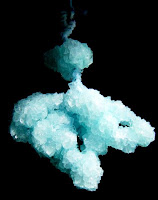 In grade 10, when I asked my physical science teacher what I needed, he accused me of being difficult, and from that point on, refused to answer any questions I or my lab partner had. We were the "giggling girls" (which only got worse over time), and he was never interested in seeing us as curious, intelligent students. The curriculum didn't help. Levers and pulleys could have been much more interesting--just ask my kids! Why were we only beginning to study that in grade 10? He gave us more academic credit for washing the glassware (doing the dishes) than for actually doing any science.
 But I was always very curious, and would not let the stereotyped opinions of this so-called teacher ruin that. Ever since then I have made a point of learning what I could, on my own, about physics, albeit from a layperson's perspective. For me it is pure entertainment. I gain pleasure in learning what I can and passing it on enthusiastically to others. It is in this spirit that I have introduced my kids to kitchen chemistry, Rube Goldberg machines, model rocketry, and amateur astronomy. My kids have enjoyed exploring fractal patterns, discussing mind experiments about black holes and dark matter over dinner, and wondering about the nature of potential extra dimensions as postulated by string theory. And why shouldn't they? These are the topics that tickle the imagination and make you come back again asking for more.
 These are the interesting things--the "what ifs", the wonders of things yet to be discovered as well as the exclamations of delight upon mixing glue and borax to get a strange polymer, the fascination of making cabbage water turn every colour in the rainbow, and figuring out what makes that happen. If the kids can know that awe and wonder about the world, and maintain it throughout their lives, I believe I will have attained something Mr. Penton never could. Maybe, in that sense, Mr. Penton did my family a favour.
In this spirit, I have shared some of our science experiments and resources we have enjoyed on Lemonade: http://www.greensim.com/lemonade/science.html

 In grade 10, when I asked my physical science teacher what I needed, he accused me of being difficult, and from that point on, refused to answer any questions I or my lab partner had. We were the "giggling girls" (which only got worse over time), and he was never interested in seeing us as curious, intelligent students. The curriculum didn't help. Levers and pulleys could have been much more interesting--just ask my kids! Why were we only beginning to study that in grade 10? He gave us more academic credit for washing the glassware (doing the dishes) than for actually doing any science.
  But I was always very curious, and would not let the stereotyped opinions of this so-called teacher ruin that. Ever since then I have made a point of learning what I could, on my own, about physics, albeit from a layperson's perspective. For me it is pure entertainment. I gain pleasure in learning what I can and passing it on enthusiastically to others. It is in this spirit that I have introduced my kids to kitchen chemistry, Rube Goldberg machines, model rocketry, and amateur astronomy. My kids have enjoyed exploring fractal patterns, discussing mind experiments about black holes and dark matter over dinner, and wondering about the nature of potential extra dimensions as postulated by string theory. And why shouldn't they? These are the topics that tickle the imagination and make you come back again asking for more.
 These are the interesting things--the "what ifs", the wonders of things yet to be discovered as well as the exclamations of delight upon mixing glue and borax to get a strange polymer, the fascination of making cabbage water turn every colour in the rainbow, and figuring out what makes that happen. If the kids can know that awe and wonder about the world, and maintain it throughout their lives, I believe I will have attained something Mr. Penton never could. Maybe, in that sense, Mr. Penton did my family a favour.
In this spirit, I have shared some of our science experiments and resources we have enjoyed on Lemonade: http://www.greensim.com/lemonade/science.html
Subscribe to:
Posts (Atom)