Sunday, 3 November 2013

The Magical Arts & Crafts Box

This one is perhaps my favourite of the gifts I have given to children over the years. It allows for spontaneity, creativity, and organized chaos. It lets child-artists take charge and invent their own projects. It also provides the basics and some extras needed for more conventional projects that may arise. It is entirely gender-neutral; although there is a parental bias towards this being a "girls' gift", never underestimate the enthusiasm that boys will have with art when their imaginations are unleashed. Variety of materials and attention to personal preferences are key.

The concept: a wide variety of art and craft materials are assembled in a large bin, with smaller items organized in labeled smaller bins and/or freezer bags. A list of contents is taped inside the lid and can be crossed off as supplies are used in order to make a convenient list for replenishing.

Some of the items we've included in our various iterations of the craft box:
- construction paper
- freezer paper and/or finger painting paper
- a sketch book
- origami paper
- various colours of printer paper
- card stock, various colours
- tissue paper, various colours
- scissors
- glue
- string
- yarn
- ribbon
- small pieces of assorted fabric
- large felt squares of various colours
- watercolour paints
- tempera paints
- finger paints
- acrylic paints
- paint brushes of various thicknesses
- crayons
- pastels
- pencil crayons
- markers (age-appropriate)
- stencils
- glitter
- glitter glue
- cotton balls
- Styrofoam balls
- stickers, esp. plain, coloured geometric shapes
- play dough
- plasticene
- clay (air-dry)
- slime/goop
- beads
- googly eyes
- pom-poms
- small bells
- craft sticks (aka popsicle sticks) and other wooden shapes
- drinking straws
- texture tools for use with thicker paints and clays such as combs, extruders, plastic outline-style cookie cutters, a rolling dowel, a cutting tool, a play mat, etc.
- glitter sequins
- assorted buttons
- small sponges
- rubber stamps
- fun foam
- calligraphy marker or pen
- sketching pencils
- sticky tape
- double-sided tape
- magnetic strips
- pin backings
- jewellery cord and fastenings
- safety pins
- brass fasteners
- paper clips
- needle and thread
- balloons
- chenille stems (aka pipe cleaners)
- natural items such as polished rocks, shells and clean twigs
- craft wire
- knitting needles and/or crochet hook
- embroidery thread
- empty spools
- corks and cork sheets
- chalk and/or sidewalk chalk
- wooden clothes pegs
- velcro fasteners and/or snaps


The list could go on and on.
As important as the contents perhaps is the container in which you present the gift. Be sure to find one that is easy to open, holds a little more than you plan to give, and also isn't so deep that things are easily lost. Smaller, labeled bins holding the tinier pieces can fit inside the larger bin. Sectioned containers work well for this project.
For a preschooler, sticking to playdough with playdough tools, fingerpaints and paper, construction paper, over-sized beads, sidewalk chalk, safety scissors and washable crayons with large drawing paper might be a good choice; older children may wish for more specific items.

Recipes for homemade playdough, slime, goop, paper mache paste, fingerpaints and more can be found at the link below, and are a nice addition to the box.

llemonade.com/concoctions

Some craft ideas to get you started can be found here (but remember, the beauty of this box is the freedom to explore with the materials, so it's probably best to use this list sparingly!)

llemonade.com/crafts

If you have the opportunity to be there while the recipient uses his/her box, try and resist the urge to guide him/her. You may find you need a box of your own--and, well, why not?! Enjoy!

Sunday, 22 September 2013

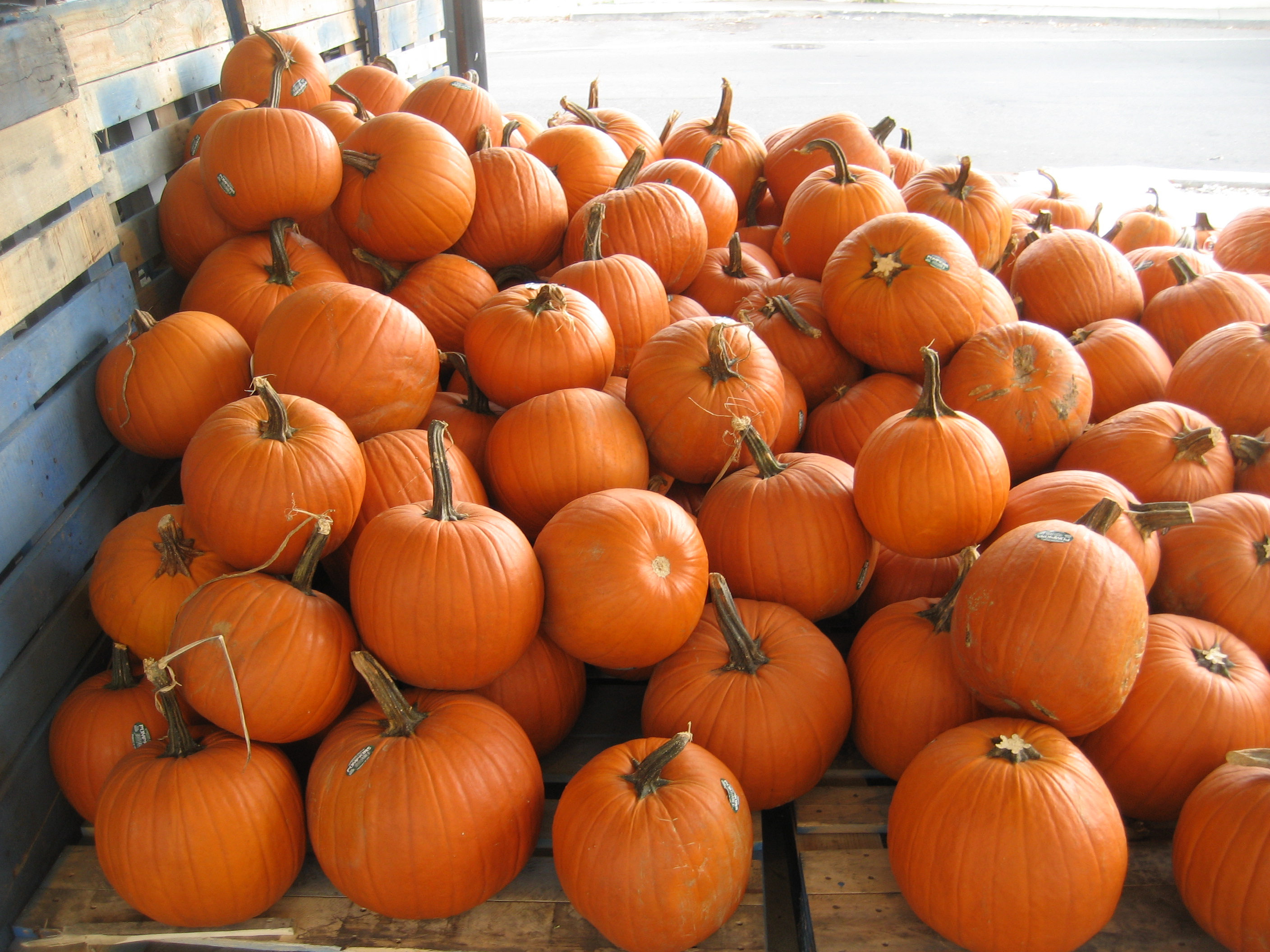
Everything Pumpkin


Or at least, all I can think of at the moment that has to do with pumpkins!

To get into the spirit of pumpkin activities, you may wish to start by reading a little about the history of pumpkin carving and Jack O'Lanterns (Wikipedia) and perhaps also about pumpkins in general.

Below are some activities, sorted by subject area, that all have one thing in common: PUMPKINS! Many of these activities lend themselves to a wide variety of ages/grade levels depending on the depth and detail into which you decide to take them.

Math:

Weight/mass/volume/density: 

Explore these concepts through measurement; have students hold a pumpkin then guess the pumpkin's weight. Graph their answers and then weigh it to see how the actual weight compares with the estimates.

Float a pumpkin in a water table and measure the displacement to determine the volume displaced. Since the pumpkin will float, try marking the water line on the pumpkin as well and use this to estimate the entire volume of the pumpkin. Carver or cut up the pumpkin then try doing this again to measure the actual volume and compare with the earlier estimate.

Pi, Proportions and Ratios

Measure the circumference and use this to determine the value of Pp. Of course, when you mention pumpkins along with pi, you may have to provide some pie as well. If time permits, hone student skills at measurement, proportions and ratios through baking your own pie in class. You can also explore the distributive property as you divide out portions for eating.

Counting:

Simple counting: count the number of creases on the outside of the pumpkin, and then count the number of seeds inside. Try this with several pumpkins and compare the results through graphs. Either roast and eat the seeds, or clean and dry them, then spray paint one side of them to use as math manipulatives similar to these made with beans later on.

More pumpkin math ideas can be found here.

Science:

Starting in the spring, plant some pumpkins with the class. Compare their growth rates. Consider altering a variable, such as using different soils, watering regimens, amounts of shade/sun etc. and record observations.

If you were to carve a pumpkin deep under water, what would happen?

Some people grow large pumpkins then carve boats out of them to race each autumn. You can see details of this Nova Scotian Festival at their website here. What scientific principles allow a boat to be made out of a pumpkin? How does the shape of the pumpkin affect its passage through water?

Many people use dry ice in their pumpkins, and there is nothing all that new there, but if you do that, you might find some of these other dry ice activities interesting.

After carving one or more classroom pumpkins, dedicate a space for it/them to decay. Look at the moulds etc. up close with a magnifying glass and/or microscope.

For older students: challenge them to design and build a propelling device to launch a small pumpkin a specified distance and/or as far as they can.

Art:

Pumpkin carving naturally lends itself to creativity, but there is more you can do with pumpkin art. Consider the seeds--these can be dried and painted for use in mosaics or pierced to become beads. If you grow your own pumpkins, you can try altering their shape by tying them with string as they grow. Pumpkins can also be painted and sealed with either shellac or varnish. You can cut out chunks (or use pieces left over from carving) to make your own vegetable printing blocks. People have used pumpkins as temporary lampshades as well. These young drummers make me wonder about using pumpkins for music--I wonder if you could use different sizes and actually tune them? As with all art, imagination is key.

Some pumpkin themed crafts (that don't have actual real pumpkins) including making a paper mache pumpkin, a Cinderella's coach from a pumpkin-like gourd, mini edible Jack O'Lanterns from oranges, and more can be found at this link.

Recipes:

There are many ways to eat pumpkin including pies, tarts, muffins, breads, cookies, soups, in casseroles and curries, stuffed as a main course, and for Harry Potter fans, in the form of pumpkin juice.

Active Games/Phys. Ed.:

Pass the pumpkin (played with a small pumpkin or pumpkin gourd)
Like "hot potato", but with a pumpkin.

Tossing games: carve out pumpkins of different sizes, labeling them with different numbers according to the points they are worth and toss ping pong or other lightweight washable balls into them from a distance.

Pumpkin roll: how far can you roll a pumpkin with a single roll? If you are daring, you might try playing pumpkin bowling where you knock down plastic pins or bottles using a small pumpkin as a bowling ball. This one is best played outdoors!

Language Arts:

Story prompts from pumpkins in literature:
- describe in detail what the life of Peter Pumpkin Eater's family might have been like and create a comic strip or short story based on your ideas
- read "The Legend of Sleepy Hollow" together (older students only!) and encourage students to set the story to music, or create a video, radio play or parody of the story
- Cinderella's coach turned into a pumpkin at midnight--what might it have looked like inside as a coach? What if she'd been trapped inside it when it transformed?
- Frank L. Baum wrote about Jack Pumpkinhead, a scarecrow-like creature made by a child named Tip and brought to life through the magic powder of life Tip's guardian uses on him. Jack's wisdom seems to depend on the number of seeds in his current head (the pumpkins which form his head are regularly replaced). These "seeds of wisdom" and the lack of them cause all sorts of misadventures, and lend themselves well as a story starter. Older students might compare this story with Mary Shelley's classic, Frankenstein.

Thursday, 19 September 2013

Planning Ahead for Halloween

Halloween is a perfect time to add a little energy into the daily routine. Some fun science-related activities require some advance planning, and now is the perfect time to get started in order to complete some of the more intriguing projects in time for Halloween.

Classic activities such as apple dolls can take a seasonal twist and become shrunken heads while students explore related topics such as food preservation and dehydration.

Chicken bones lend themselves well to Halloween as well, in the form of gruesome bone wind chimes, which can lead to the exploration of sound waves and pitch, and also "rubber" chicken bones in which students explore the effects of an acid on the calcium in bones to create a fun twist on the skeleton theme.

Students can learn about owls and their dietary habits through owl pellet dissection. You can collect and sterilize your own pellets, or order some from an educational supplier.

Carving Jack O'Lanterns early on allows you to watch as they slowly decompose into Zombie Jack O'Lanterns. Use a magnifying class and/or microscope to examine the results up close.

Detailed instructions for these activities can be found at the following links:
bone windchimes
apple dolls and also, the "shrunken head" or "house elf head" verson of this activity
"rubber" chicken bones that can be tied in a knot
dissecting owl pellets

Also see my earlier blog post on Halloween Science
as well as my main Halloween Activity Index
my Strange Science page
and related Harry Potter Activities


Tuesday, 17 September 2013

The Latest False Dichotomy in Education

Years ago when I was a student teacher, there was a battle of sorts being waged in the language arts curriculum: the phonics vs. whole-word approaches to teaching reading. On one hand, students were asked to sound-out all words they did not know, and on the other, students were asked to memorize thousands of words. Reality: fluent readers use a variety of techniques including but not limited to the ones espoused by such methods. When some people tried to call this approach "whole language" it created confusion as many missed the difference between "whole word" where individual words are memorized out of context with 'whole language" in which context, along with phonics and sight words is an important component.

Many moons later, we see a similar battle being waged in the teaching of mathematics. 

There are the traditionalists who value "sage on the stage" and "drill and kill" methods in which students memorize algorithms and focus on answer-driven tests. Students become walking calculators, and weaker students are often left without the conceptual understanding to allow them to know when and how to apply these algorithms to solve everyday problems. Mnemonics such as "Yours is not to reason why, just invert and multiply", "FOIL" (which only works for up to two terms), and what I've only recently discovered, the "butterfly method" for multiplying fractions are examples of how conceptual understanding is replaced with memory tricks in order to gain a correct answer on a standardized test.

Then there are the constructivists who believe that students must create their own knowledge set through experimentation. They offer an overwhelming range of options for students to explore, but often neglect the final stages of consolidation and review, as well as time for practice with additional problems. Critics argue that since it took centuries to develop the fields of mathematics, expecting students to "reinvent the wheel" is a waste of time for everyone. Such teaching can also be time-consuming, and students who are struggling can become overwhelmed and confused with the large variety of methods to solve a given problem.

Again, just as in the reading example, the polar extremes reflect a false dichotomy when it comes to learning.

Since there seems to be a reluctance for educators, policy makers and the general public to consult the literature, examine what we know about cognitive development and read the studies, there becomes a tendency to grasp onto the methods one is familiar with and hold these as sacred. In many cases in North America, this means that the traditionalist methods are held in higher regard than the constructivist methods. Looking to other countries that tend to do well in mathematics, there are some interesting cultural differences that appear in the approach to teaching and evaluation. One example can be seen in this video with Phil Daro http://vimeo.com/30924981.

In the middle, is student inquiry (again, the name is often used as a substitute for pure constructivism, which causes confusion) in which students are encouraged to try out problems using whatever means they can, discuss the various methods that worked and didn't, share and yes, memorize the methods that work consistently, and connect these methods and patterns to problems they encounter in everyday life. There is structure to the lesson, but there is also a place for students to work with problems on their own terms, experiment and make connections with prior learning. Lessons are scaffolded so that they build on concepts already mastered. Consolidation happens with the whole class and is reviewed again at the start of the next lesson. Students still memorize times tables and formulas, but they also understand where these come from and what is happening with them. They can use a matrix to show multiplication and can tell you why ax + by + c= 0 is a different way of showing y=mx +b, and how various different values of "m" will change the slope of a line when graphed. They can relate this to situations in their everyday life. They know what to do when confronted with 
(2x + y)(3x +2y -z)
 because they have learned the underlying pattern of how this works, rather than just a convenient but limited mnemonic. The understand that BEDMAS is an mnemonic shortcut that helps them use the distributive property, and that the multiplication/division are interchangeable as are addition/subtraction.
Without context, understanding of the underlying pattern, and sufficient understanding to apply the concept widely, a math student's abilities are no more useful than a calculator, and are likely much slower at that. We need people who can not only calculate, but choose the appropriate algorithm and problem-solve in a variety of situations. We need people who understand how to program the algorithms in the first place. Math is not a religion to be taken on faith; it is a science that stands up to scrutiny. We would do well to remember this as we approach the subject in the classroom.

Students learn by doing and thinking, by struggling through problems. When this is connected to their everyday experiences, it becomes meaningful. If we can recognize this in other subject areas, then why not in math?


Wednesday, 14 August 2013

Working Backwards

Looking through many resources in preparation for teaching math in the school system, there seems to be a very common pattern that is rarely broken: introduce algorithm, apply it to increasingly difficult pre-determined problems, review, then tack on a "real life" or "word" problem to add application as almost an afterthought. Some resources even skip this last step, and few indeed involve proofs, aside from a couple that show how to derive the quadratic equation.

In mathematics, we have a tendency to ask students to accept algorithms without question or debate. We essentially eliminate critical thinking from our teaching.


This is not the way teachers are trained in my province, yet many resources that are used in our classrooms still follow this sequence, and many teachers drift toward this in their practice. The emphasis remains on the lower levels of Bloom's Taxonomy at the expense of activities that promote higher-order thinking. In my review of the literature, it appears that teachers are most likely to work in this direction for two reasons: this is the way they were taught, and their comfort level with the curriculum is low.

When I say their comfort level is low, I do not mean that they do not necessarily hold a deep conceptual understanding of the topic, but that for various reasons (most often relating to allotted classroom time), they feel the need to get the basics covered as quickly as possible, and for many, teaching algorithms is how they view "the basics" when it comes to math.

But what if we were to reverse this direction, and start with the applied problem?

Critics say that this leaves students high and dry, with the need to reinvent conceptual knowledge that took mathematical superstars many years to develop. They say it leads to confusion when the approach they might try is not the most efficient method.

However, no one is saying that we withhold the algorithms from the students, only that we let them think about the problems that lead to them in order to foster a sense of pattern and deeper conceptual understanding of the processes involved in applying mathematical thinking.

All the memorized algorithms in the world are useless if students never learn when or how to use them outside of math class or standardized testing.

Sure, it takes a little more time for students to think through the "why" of a problem, but feeding them algorithms to memorize and apply does students a disservice. Computers can work through algorithms, and they do it faster and more accurately than people. What we need are people who can reason mathematically, and this requires that we provide a space for applied problem solving and reflection.

It is my gut feeling based on what I've seen with the students I've worked with that students who develop applied problem solving skills aka mathematical reasoning skills, begin to make deeper connections quicker with later topics. In this way, the time invested at the outset may offset the time needed to cover later related topics.

For teachers to abandon the chalk-and-talk and promote these skills will take a leap of faith. It is much more comfortable to stay with the known, particularly when there is a perceived crunch in terms of curricular content demands and the allotted classroom time to cover it. Students may resist since they are used to being given the entire topic at the outset. People tend to resist change.

How many times have we heard the question from our students, "When will we ever use this?". Students, particularly those for whom math does not come easily, need to understand this in order to invest their time and effort accordingly. Resources like this one: 101 uses for a quadratic equation and this one: "Why study math?" can be good places to start. Starting with a relevant real-life problem is also an effective way to connect theory with application.

I issue the following challenge to all teachers who read this blog: choose one topic this year to present this way and see how it goes. Start with a real-life problem, challenge students either individually or in groups to devise a way to tackle it, and share results using Bansho or another similar method in which the different approaches can be grouped in a meaningful way. Discuss which ones work and which don't and why. Finish with a review of those ways that work best. Follow up with some practice problems.

Did you or your students resist? What challenges did you face? Did different students participate than usual for your class? How might you use this to best encourage mathematical reasoning in your students?